
Most sneakerheads treat a sudden rain shower like a death sentence for their footwear, but the truth is that premium suede is far more resilient than you've been led to believe. You've likely stared at a fresh scuff or a water spot on your favorite sneakers with a sense of dread, terrified that one wrong move will permanently "bald" that delicate nap. It's a common anxiety, especially when you've invested significantly in high-value pairs and feel confused by conflicting advice about using water versus specialized solvents. Understanding the best way to clean suede shoes is the only way to move past that fear and keep your rotation looking pristine.
The good news is that suede restoration is actually a dry-process science where mechanical action matters more than the liquid you use. We'll show you how to master expert techniques that preserve texture and protect your sneaker investment for years to come. This 2026 guide covers everything from the essential horsehair brush techniques to the strategic use of specialized erasers, ensuring you can remove stubborn spots and restore that signature fluffy texture with total confidence. Whether you're dealing with a minor mark or a deep stain, you're about to learn the professional secrets to keeping your collection in showroom condition.
Key Takeaways
- Understand why the best way to clean suede shoes involves a dry-cleaning approach that prioritizes mechanical brushing over saturated liquid solutions.
- Identify the essential tools for a professional kit, including the specific roles of soft nylon and specialized brass-bristle brushes.
- Learn the critical technique of letting mud dry completely before cleaning to avoid pushing dirt deeper into the delicate leather fibers.
- Discover how to use simple household absorbents to lift stubborn oil and grease spots from your sneakers without ruining the texture.
- Protect your footwear investment by using hydrophobic sprays and cedar shoe trees to prevent future water damage and maintain the original shape.
Understanding Suede: Why Cleaning Requires a Unique Approach
Suede isn't just a style choice; it's a specific material structure that demands a specialized maintenance routine. To achieve professional results, you first need to understand that the best way to clean suede shoes involves respecting the delicate nature of the hide. Suede is crafted from the underside of animal hide, which is why it feels so much softer and more pliable than the smooth, outer grain of standard leather. This structural difference creates the "nap," which is the raised surface of fibers that gives suede its signature look and feel. Because these fibers are exposed and untreated, the material is incredibly microporous. It acts like a series of tiny straws, drawing in moisture and oils far faster than finished leather ever would.
When researching What is Suede?, you'll find it's frequently compared to nubuck. While they appear similar, nubuck is created by sanding the tougher outer hide, resulting in a finer, more velvety grain. Modern sneakers also frequently utilize synthetic "faux" suede. These are often polyester-based materials designed to mimic the texture of genuine leather while offering slightly better resistance to water. However, synthetic fibers don't always "heal" as well as the real thing once the texture is crushed or matted, making your cleaning technique even more critical.
The Anatomy of a Suede Stain
Stains on your sneakers generally fall into two categories: surface-level debris and deep-set liquid penetration. Surface dust is manageable, but mud and road salt are much more dangerous. As you walk, these particles act as microscopic abrasives. They effectively sand down the nap over time, leading to that "balding" look that ruins the aesthetic of high-end footwear. Oils from your skin or accidental food spills are equally problematic because they bond with the leather fibers, darkening them permanently if they aren't lifted away correctly.
The "Dry First" Philosophy
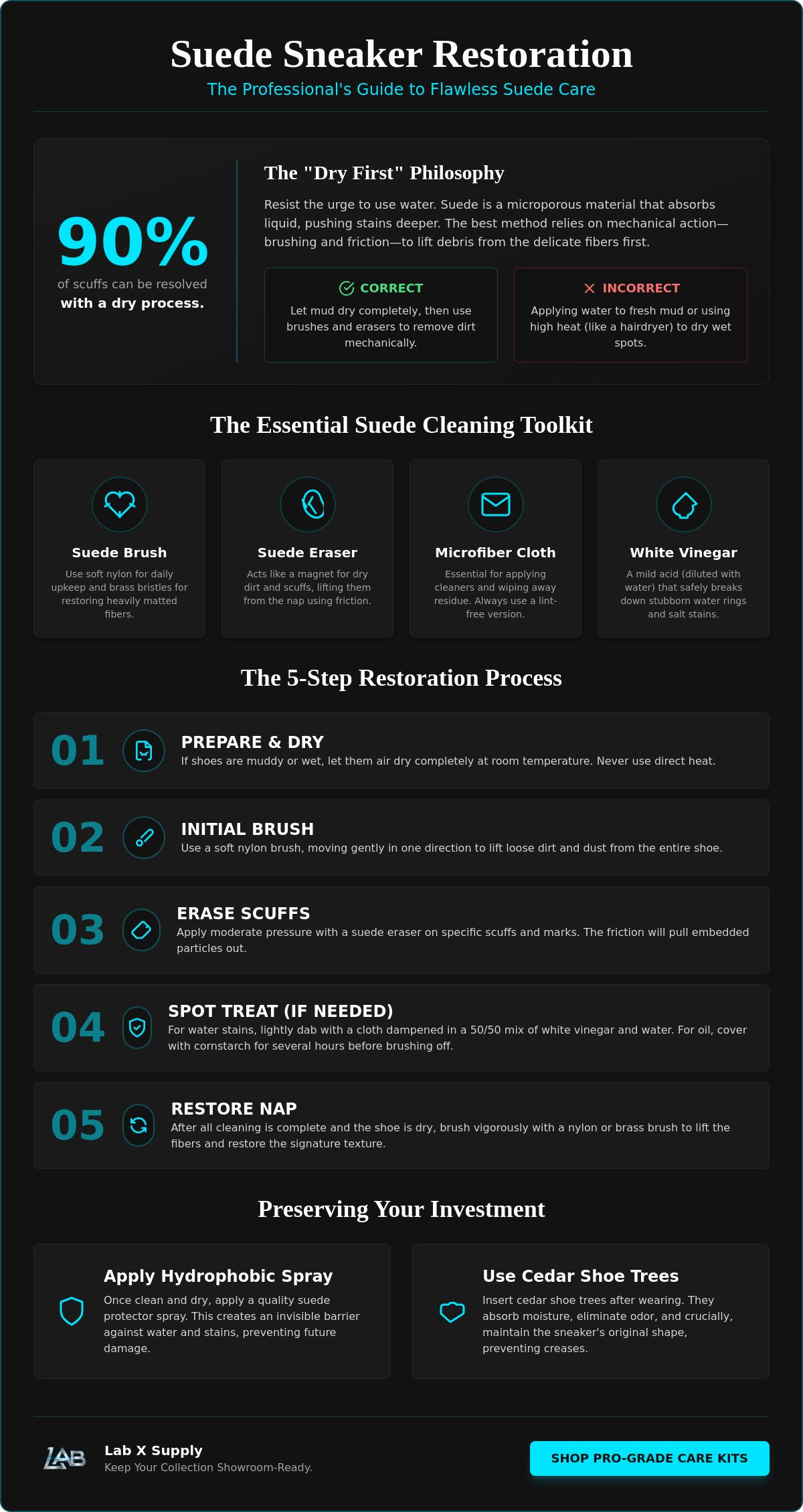
Most owners instinctively reach for a wet cloth when they see a mark, but the best way to clean suede shoes usually starts with no water at all. Roughly 90% of common scuffs and dried dirt can be resolved through mechanical action alone. Brushing the shoes while they are dry keeps the fibers from clumping together and prevents you from pushing stains deeper into the pores. If your shoes do get wet, never use a hairdryer or place them near a radiator to speed things up. High heat makes the leather brittle and can shrink the hide, permanently altering the fit of your sneakers. A shoe is generally considered "too far gone" for a DIY fix if the leather has begun to crack or if the nap has been completely worn away to a shiny, smooth surface over a large area.
The Essential Suede Cleaning Toolkit for 2026
Setting up a professional-grade kit doesn't require a massive investment, but it does require precision. As of April 2026, the average price for the top 10 best-selling suede brushes is approximately $14.89, proving that salon-quality results are accessible for any collector. The best way to clean suede shoes starts with having the right hardware ready before the first scuff happens. Maintaining the crisp look of your favorite sneakers is much easier when you aren't scrambling for tools mid-stain.
- The Suede Brush: You need both a soft nylon brush for daily maintenance and a brass-bristle option for deeper agitation.
- The Suede Eraser: This tool acts as a friction-based magnet for dry particles, lifting scuffs without the need for chemicals.
- Microfiber Cloths: Always choose lint-free versions to avoid leaving tiny white fibers behind on the dark, porous nap.
- White Vinegar: A mild acid that breaks down salt and water rings without bleaching the leather.
Choosing the Right Brush for Your Sneaker
Not all suede is created equal. If you're working with a fine-grain nubuck or a delicate designer slide, a crepe brush is your best friend. The soft, gummy texture of the crepe ribbons grabs dust without scratching the hide. For "hairy" suede or heavy-duty mud removal, brass bristles provide the necessary torque to separate matted fibers. If you're working around tight eyelets or stitching, a soft-bristled toothbrush is a perfect hack for detail work that larger brushes might miss.
Liquid Cleaners: What to Keep in the Cupboard
When dry brushing isn't enough, you'll need a targeted liquid approach. White vinegar is generally safer for color-fastness than rubbing alcohol, which can occasionally dry out the leather too quickly. A rising trend in 2026 is the use of micellar water for light surface stains on luxury slides; its gentle surfactants lift oils without leaving a soapy residue. For deep restoration, the best way to clean suede shoes often involves a dedicated foam solution. Commercial kits, like the Pink Miracle Shoe Cleaner Kit which retails for about $17.97, offer a balanced pH that protects the leather's natural oils while emulsifying dirt. Always test any liquid on a small, hidden area like the inner heel before applying it to the entire shoe.
The Best Way to Clean Suede Shoes: A Step-by-Step Guide
Before you touch a brush to your sneakers, patience is your most valuable asset. If your shoes are damp from rain or a recent spill, you must let them dry completely at room temperature. Placing them near a heater or in direct sunlight is a mistake that leads to brittle, cracked leather. Once the material is bone-dry, you can begin the mechanical cleaning process. Many enthusiasts agree that the best way to clean suede shoes is to follow a strict order of operations that prioritizes dry agitation before introducing any liquid solutions.
- Step 1: Dry the shoes naturally. Use cedar shoe trees to maintain the shape and absorb internal moisture.
- Step 2: Use your suede brush in a single, consistent direction. This removes loose surface dirt and "wakes up" the nap.
- Step 3: Address scuffs with a suede eraser. Use firm, circular motions to lift particles trapped in the fibers.
- Step 4: Treat deep-set stains with a microfiber cloth dipped in a small amount of white vinegar. It should be damp, never soaking.
- Step 5: Perform the "Reset." Once the vinegar has evaporated, brush the shoes back and forth to lift the nap and restore the original texture.
Mastering the Brushing Technique
Success depends on how you handle the brush. Always start by brushing with the grain to identify the natural "flow" of the fibers. This is especially important for high-nap "hairy" suede, which can look messy if the fibers are pushed in too many directions. If you encounter stubborn grit, switch to a back-and-forth motion to loosen the debris. Watch the surface closely. If you notice an excessive amount of fiber shedding, lighten your pressure. You want to clean the nap, not sand it away until the shoe looks bald.
Applying Liquid Solutions Safely
When dry methods fail, the best way to clean suede shoes involves a targeted application of white vinegar. Never pour the liquid directly onto the sneaker. Instead, use the "mist and dab" method. Lightly dampen your cloth and press it into the stain, allowing the mild acid to break down the bond between the dirt and the leather. Always perform a spot test on a hidden area, like the inner heel or the side of the tongue, to check for color bleeding. The vinegar scent might be strong initially, but it will dissipate completely as the shoes dry, leaving no sticky residue behind.
Troubleshooting: Mud, Oil, and the "Water Stain" Paradox
Even with a professional toolkit, certain stains require a tactical departure from standard maintenance. The most common crisis sneaker owners face is encountering wet mud. Rushing to wipe away wet sludge is the fastest way to ruin a pair of premium sneakers, as the pressure forces liquid dirt deep into the microporous hide. Instead, let the mud dry into a crust. Once it's solid, you can flick it away with a brass-bristle brush, which is the best way to clean suede shoes without creating a permanent smear.
Water spots present a unique paradox. While moisture is generally the enemy, the only way to fix a localized water ring is often to dampen the entire shoe. If you've been caught in a light drizzle that left unsightly spots, use a clean, damp cloth to apply a uniform layer of moisture across the whole surface. This prevents the "tide marks" that occur when only one area dries at a different rate than the rest of the leather. For high-value sneakers, avoid DIY attempts on ink stains. Ink bonds almost instantly with the nap, and household solvents usually just spread the pigment, making professional intervention a necessity.
Dealing with Rain and Water Damage
If your footwear gets completely soaked, your first move should be to stuff them with unprinted paper towels or white tissue paper. Avoid using newspaper; the ink can transfer onto the damp suede and cause permanent discoloration. This stuffing maintains the shoe's silhouette and draws moisture out from the inside. If the material feels stiff or "crunchy" once dry, it doesn't mean the leather is ruined. It simply means the fibers are stuck together. Use your soft nylon brush to gently massage the nap back to its original flexibility.
Oil and Salt: The Sneakerhead’s Worst Enemies
Oil stains from food or automotive leaks require an absorbent approach rather than a liquid one. Cover the spot with a thick layer of cornstarch or talcum powder and let it sit for a full 24 hours. The powder acts as a vacuum, drawing the grease out of the leather pores. For winter-related damage, salt lines can be stripped away using a solution of two parts water to one part white vinegar. Salt crystals expand when wet, which can physically tear suede fibers from the inside. Neutralizing the salt quickly with this mild acidic mix is the best way to clean suede shoes during the colder months when road treatments are prevalent.
Preserving Your Investment: Protection and Resale Tips
Cleaning your footwear is only half the battle; the other half is ensuring you don't have to repeat the process every week. In the secondary market, the best way to clean suede shoes is often viewed through the lens of resale value. If you eventually plan to list your pair on Lab X Supply, the "Condition" grade will be the primary factor in your payout. A flattened, shiny, or discolored nap can significantly reduce the market price of a sneaker. Beyond just the money, a poorly maintained nap can sometimes make a legitimate, high-value shoe look like a replica. Authentic suede has a characteristic "travel" or movement when you run your finger across it. If that texture is lost to dirt or improper washing, the shoe loses the premium feel that defines its authenticity.
The 2026 Guide to Suede Protectors
Modern hydrophobic sprays are more advanced than ever, but you must choose your chemistry wisely. Silicon-based sprays offer heavy-duty water resistance but carry a risk of slightly darkening lighter shades of tan or grey. For delicate sneakers where color preservation is the priority, water-based protectors are the gold standard. We recommend the "double-coat" method for any new acquisition. Apply a light, even mist to the entire shoe before the first wear, let it dry for 20 minutes, and then apply a second layer. This creates a much more durable barrier against liquid penetration. To learn more about keeping your collection in peak condition, explore The Ultimate Guide to Authentic Sneakers in 2026.
Conditioning and Storage
Many owners wonder if they need to apply conditioner to suede like they do with smooth leather. Generally, you should avoid it. Traditional conditioners contain heavy oils that can weigh down the fibers and ruin the "fluffy" texture you worked so hard to restore. Only use a dedicated suede conditioner if the hide feels exceptionally brittle after a deep vinegar clean. Storage is equally vital. UV light is a silent killer that causes dyes to fade and leather to dry out. Keep your rotation in a cool, dark environment away from windows. Cedar shoe trees are non-negotiable for high-end pairs because they maintain the structural integrity of the toe box while naturally absorbing moisture. Combining these habits with the best way to clean suede shoes ensures your footwear remains a true asset. Ready to upgrade your collection? Browse our latest authentic sneakers and slides to find your next favorite pair.
Step into the Future of Sneaker Maintenance
Mastering the best way to clean suede shoes isn't just about removing a single stain; it's about protecting the long-term value of your collection. By prioritizing dry brushing techniques and using specialized tools like erasers and brass-bristle brushes, you can maintain that signature nap without the risk of permanent water damage. Remember that patience is your most effective tool. Letting mud dry completely and performing spot tests ensures your high-value sneakers stay in showroom condition for years to come.
If you're ready to expand your rotation with total confidence, find your next pair of authentic sneakers at Lab X Supply. We are specialists in high-demand slides and sneakers, and we provide an authenticity guarantee on every single pair. With global shipping available for the 2026 collector, your next grail is never out of reach. Your suede doesn't have to be a source of stress. With these professional methods in your arsenal, you can wear your favorite pairs with complete peace of mind.
Frequently Asked Questions
Can I use a regular hairbrush on suede shoes?
You shouldn't use a standard hairbrush because the bristles are typically too soft or made from materials that won't effectively lift the nap. Suede requires the specific tension of nylon or brass bristles to separate fibers and remove trapped dirt. Using the wrong brush can simply flatten the surface further or fail to reach the deep-set grit that causes premature wear.
Is it okay to put suede sneakers in the washing machine?
You should never put suede sneakers in a washing machine. The combination of complete saturation and mechanical agitation will permanently strip the natural oils from the leather, causing it to shrink, crack, or become brittle. This process often leads to irreversible color bleeding and a "cardboard" texture that no amount of brushing can fix.
How do I fix suede that has become "shiny" or flat?
Shiny or flat spots usually indicate that the nap has been crushed or clogged with oils. The best way to clean suede shoes with this issue is to use a suede eraser to break up the flattened fibers, followed by vigorous brushing with a brass-bristle brush. This mechanical action lifts the fibers back into their original vertical position, restoring the signature "fluffy" texture.
Does white vinegar ruin the colour of suede?
White vinegar is generally safe and won't ruin the color if you use it sparingly and perform a spot test first. It's a mild acid that effectively breaks down salt and water stains without the harshness of heavy chemicals. Always use the "mist and dab" method rather than soaking the material to ensure the dye remains stable and the leather stays supple.
What is the best way to remove gum from a suede sole and upper?
The most effective method is to harden the gum first by placing an ice cube in a plastic bag directly against the spot. Once the gum is frozen and brittle, use a blunt knife or a specialized suede tool to gently pry it off. Any remaining residue can be lifted away with a suede eraser and a final pass with a firm brush to reset the texture.
How often should I apply suede protector spray?
You should reapply a hydrophobic protector spray every four to eight weeks depending on how frequently you wear the shoes. If you live in a particularly wet or snowy climate, monthly applications are recommended to maintain a strong barrier. Always ensure the shoes are completely clean and dry before applying a new coat to prevent locking in dirt.
Can I use a steam cleaner on my suede sneakers?
Steam cleaning is extremely risky and generally discouraged for DIY maintenance. The high heat can shrink the leather hide and alter the shape of your sneakers, while the concentrated moisture can cause water spots or dye migration. Stick to dry brushing and localized vinegar treatments to achieve professional results without the danger of heat damage.
What should I do if my suede shoes get soaked in a rainstorm?
If your shoes are drenched, start by blotting away excess water with a lint-free cloth and stuffing them with unprinted paper towels to hold their shape. Let them dry naturally at room temperature, away from any direct heat sources. Once they are dry, the best way to clean suede shoes is to use a stiff brush to break up the stiffened fibers and restore the nap's movement.