
In 2023, parents purchased over 1.4 billion pairs of children's shoes online, yet finding the right pair remains a constant challenge. It's frustrating when you invest in a stylish pair of kids sneakers only to have them fall apart after a few weeks of playground use. Between the confusion of GS versus PS sizing and the rising risk of counterfeit products in the resale market, it's easy to feel overwhelmed. You want footwear that balances durability with the latest trends, but you shouldn't have to guess about authenticity or fit.
This guide is here to help you make informed decisions for your child's wardrobe. You'll discover how to decode complex sizing charts and identify the materials that stand up to daily wear. We'll also explore how to find a trusted source for authentic, hard-to-find styles so you can shop with total peace of mind. From understanding foot growth rates to mastering the resale market, here is everything you need to know about buying premium footwear that lasts.
Key Takeaways
- Learn to decode industry sizing labels like GS and PS to ensure a perfect fit across different developmental stages.
- Identify high-quality design features, such as durable traction patterns and independent closure systems, that support active play.
- Understand how to leverage the resale market to find authentic, limited-edition kids sneakers that are no longer available in retail stores.
- Discover the critical differences between performance athletic shoes and lifestyle footwear to better support your child's foot health and bone development.
Why Choosing the Right Kids Sneakers Matters in 2026
In 2026, the global kids' footwear market is valued at nearly $9.7 billion, reflecting a massive shift in how parents approach their children's wardrobes. Buying kids sneakers isn't just about finding something that fits for a few months. It's an investment in physical health and a nod to a growing cultural movement. With the average child consuming 2.6 pairs of shoes annually, the focus has moved away from disposable fashion toward durable, high-quality materials that can withstand both the playground and the classroom.
The Impact of Footwear on Developing Feet
A child's foot is a complex structure of developing bones and cartilage rather than just a smaller version of an adult foot. During the toddler and preschool years, feet can grow half a size every two to three months. This rapid growth makes flexible outsoles essential. Shoes that are too rigid can restrict natural movement and hinder proper bone alignment. To ensure there's enough room for this growth without sacrificing stability, parents should use the "thumb rule": there should be about half an inch of space between the longest toe and the front of the shoe. Breathable uppers made from leather or advanced mesh are also vital. These materials prevent moisture buildup, which is crucial for active kids who spend hours running and playing.
The Cultural Rise of Kids Streetwear
The "mini-me" trend has completely transformed the market. Parents who appreciate the history of sneakers often want to share that passion with their children. This has led to a surge in demand for "hype" sneakers in smaller sizes, often mirroring popular adult releases. Unlike toys that might be forgotten in weeks, authentic kids sneakers often hold their value. In many cases, rare or limited-edition youth sizes have a strong resale market, making them a preferred gift for families who value style and longevity. Lab X Supply specializes in this niche, providing a platform where parents can source verified, authentic footwear that retail stores often sell out of instantly. By choosing premium materials and verified products, you're ensuring that your child's shoes are built to last while looking great.
Decoding Kids Sneaker Sizing: From Toddlers to Grade School
Shopping for kids sneakers online often feels like learning a new language. You will see acronyms like BC, TD, PS, and GS, which stand for Baby/Crib, Toddler, Preschool, and Grade School. BC sizes are designed for infants and usually feature soft soles. TD sizes generally range from 2C to 10C, while PS sizes cover the 10.5C to 3Y bracket. Finally, GS sizes range from 3.5Y to 7Y. Understanding these brackets is essential because brands often release the same style across all four categories with slight design variations to suit different ages.
Accurate measurement is the only way to avoid the headache of returns. Use a piece of paper and a ruler to measure your child's foot from the heel to the longest toe. Add 0.5 inches (1.2 cm) to that measurement to allow for natural growth. This is a standard guideline, but you should also seek expert advice on children's footwear regarding specific developmental needs or foot shapes. Be careful when switching brands. A size 10 in one brand might feel like an 11 in another, so always check the brand's specific centimeter-to-size conversion chart.
The GS (Grade School) Sizing Anomaly
GS sizing acts as the functional bridge between childhood footwear and adult performance models. Many women with smaller feet realize that a 7Y in GS is equivalent to a Women’s 8.5. This allows adults to occasionally shop the youth section for a lower price point, though there are technical differences to consider. Adult sneakers often feature more advanced cushioning or premium leather compared to GS versions, which are simplified for lighter bodies. If your child is an elite athlete, the adult version might offer better support, but for daily wear, GS models are a perfect choice. You can find many of these versatile authentic sneakers at Lab X Supply.
Preschool and Toddler Considerations
Toddlers' feet are often wider and flatter than older children's feet because their arches haven't fully developed. This makes wide-width options necessary to prevent pinching or blisters. You should move from soft-sole crib shoes to rubber-soled sneakers as soon as your child begins taking independent steps. The rubber provides the traction needed for stability on hardwood or playground surfaces. Keep in mind that "Infant" and "Toddler" labels can overlap depending on the brand. Always prioritize the actual measurement over the age-based label to ensure a healthy fit.
Performance vs. Lifestyle: Finding the Right Balance
Choosing between a basketball shoe and a casual kick involves more than just picking a color. Most kids sneakers fall into two categories: performance models for sports and lifestyle models for daily wear. While a high-performance basketball shoe offers excellent lateral support, it might be too heavy or stiff for a full day in a classroom. On the flip side, a flat-soled lifestyle shoe might lack the traction needed for a fast-paced game of tag on a damp playground. Finding the right balance means looking at where your child spends most of their time.
Weight is a factor that parents often overlook. Heavy sneakers can hinder a child's natural movement and cause quicker fatigue during play. Lightness should be a priority for younger children who are still perfecting their balance. Traction patterns also vary by age; toddlers need wider, flatter outsoles for stability, while older kids benefit from multi-directional "herringbone" patterns that allow for quick pivots and sprints.
Advanced cushioning technologies like "Air" or "Boost" are popular marketing points, but their benefits depend on the child's weight. Younger children are often too light to fully compress these specialized foams. For toddlers and preschoolers, a simple EVA foam midsole provides plenty of comfort. As kids grow into the Grade School (GS) size range and engage in more high-impact sports, these premium cushioning systems become more effective at absorbing shock and protecting developing joints.
Athletic Performance Features for Youth
Athletic designs prioritize function over form. If your child plays indoor sports, look for non-marking outsoles to satisfy school gym requirements. High-top designs are often chosen for ankle support, but low-tops allow for a greater range of motion; the choice usually comes down to personal preference and the specific sport. One essential feature for active kids is a reinforced toe cap. Children frequently drag their feet or scuff the front of their shoes, and a durable rubber overlay can double the lifespan of the footwear.
Lifestyle and Streetwear Aesthetics
Streetwear culture has made classic silhouettes like the Dunk or Air Force 1 staples in the youth market. These kids sneakers offer a timeless look that works for both casual school days and more formal family events. Material choice is critical here. While suede looks premium, it's notoriously difficult to clean after a muddy day. Smooth leather or high-quality synthetics are better choices for parents because they can be wiped clean with a damp cloth. Styling these kicks is easy; they pair just as well with joggers as they do with denim, making them a versatile addition to any wardrobe.
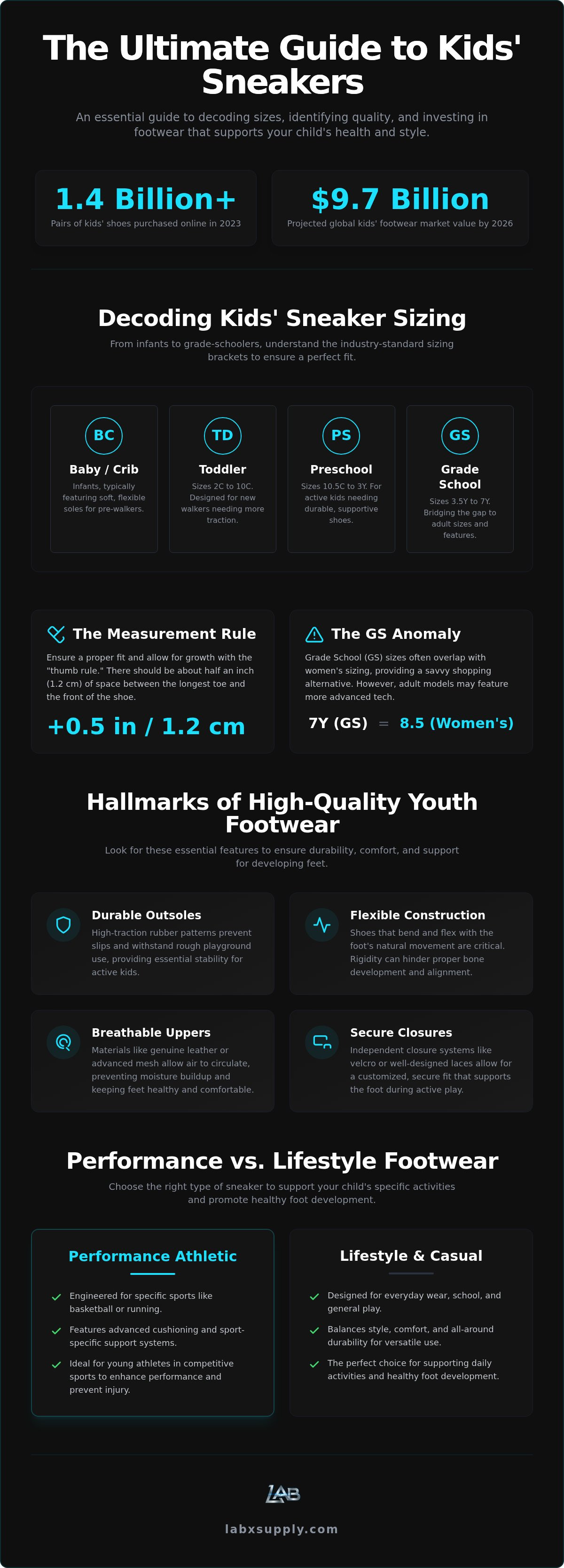
Key Features to Look for in High-Quality Youth Footwear
While many budget brands prioritize machine-washable features, parents seeking true longevity should look deeper into the construction of kids sneakers. High-quality materials like full-grain leather or reinforced synthetics provide structural support that basic fabrics often lack. It's about finding the intersection of orthopedic health and streetwear style. A shoe that looks great but lacks proper insole technology can lead to discomfort and poor foot alignment during critical growth stages.
Insole technologies like OrthoLite provide long-term cushioning and moisture management, which is essential for active children. Many premium models also utilize Phylon foam midsoles. This material is lightweight and responsive, offering the shock absorption needed to protect developing joints without adding unnecessary bulk. Safety is another major consideration. Reflective elements on the heel or tongue provide visibility during evening play, while sturdy heel pull-tabs are a non-negotiable feature that helps small hands put on shoes independently.
Closure Systems for Every Age
Velcro is generally superior for the 3 to 6 age bracket. It builds confidence by allowing children to dress themselves without adult assistance. As fine motor skills develop, transitioning to traditional laces becomes a developmental milestone. For parents who want the best of both worlds, many major brands now offer innovative "Easy-on" systems. These designs use collapsible heels or elasticized entry points to ensure a secure fit while removing the frustration of constant untying. You can shop authentic kids sneakers with these advanced closure systems at Lab X Supply to ensure your child stays both stylish and secure.
Durability Checklist for Parents
A common pitfall is choosing shoes with solely glued outsoles. Stitched outsoles are far more durable and significantly less likely to delaminate after months of heavy playground use. You should also examine the inner lining. Look for soft, moisture-wicking textiles that prevent the friction that causes blisters and chafing. If your child plays outdoors regardless of the weather, consider sneakers with water-resistant treatments. These coatings help maintain the material's integrity and keep feet dry during damp morning commutes to school. By focusing on these technical details, you ensure that your investment lasts until the next growth spurt.
Shopping for Authentic Kids Sneakers at Lab X Supply
Standard retail models often fail parents when a popular release sells out in minutes. If you're looking for specific, hard-to-find kids sneakers, the resale market is often the only reliable destination to secure the styles your child wants. Lab X Supply bridges the gap between collectors and families by sourcing and delivering verified footwear globally. This curated approach ensures you aren't limited to what's sitting on a local department store shelf. By focusing on a global supply chain, we provide access to limited editions and sold-out colorways that traditional retailers simply can't offer.
To help families prepare for the upcoming season, Lab X Supply is currently running a "Back to School" promotion as of August 2026. Parents can receive a 20% discount on orders of $500 or more. This makes it an ideal time to stock up on multiple sizes or coordinate footwear for the whole family. Shopping through a trusted resale marketplace removes the stress of "drop days" and allows you to browse a refined selection of the world's most popular footwear at your own pace.
The Importance of Authenticity in Kids Sizes
Counterfeiters don't just target adult sizes; they frequently produce fake youth models that lack the structural integrity of the original designs. Common red flags in counterfeit youth footwear include uneven stitching, chemical odors from industrial adhesives, and incorrect font on the sizing labels. These fakes aren't just a style issue; they often lack the necessary support for growing feet. Professional verification is essential for high-end resale to ensure your child is wearing a product that meets original manufacturer standards. At Lab X Supply, every pair of sneakers undergoes a rigorous inspection process to guarantee it's legitimate before it reaches your door.
Completing the Look with Slides
Footwear needs extend beyond the classroom and the playground. Slides have become a staple for post-sport recovery and casual weekend wear. The enduring popularity of adidas slides highlights a broader shift toward prioritizing comfort after a long day of school or athletic practice. Within the modern slide series, design iterations have led to better arch support and more durable foam compounds that handle daily use with ease. To preserve the resale value and lifespan of your kids sneakers, encourage your children to switch into slides for low-impact activities. Keeping sneakers clean with a soft brush and avoiding the harsh cycle of a washing machine will ensure they stay in top condition for as long as they fit.
Step into the Future of Youth Footwear
Finding the perfect balance between orthopedic support and modern style shouldn't be a guessing game. You now have the tools to navigate the complex world of GS and PS sizing while identifying the technical features that ensure your child's shoes survive the playground. By prioritizing durable materials like full-grain leather and verifying authenticity through a trusted marketplace, you're investing in your child's physical development and their confidence. High-quality kids sneakers are more than just a fashion statement; they're a foundation for active play and healthy growth.
Ready to upgrade your child's rotation? Lab X Supply is a trusted marketplace for sneaker enthusiasts, offering a curated selection of hard-to-find youth sizes that you won't find in traditional retail stores. We provide global shipping on all authentic footwear, ensuring that the latest styles are accessible no matter where you live. Shop the Latest Authentic Kids Sneakers at Lab X Supply today and give your family the quality they deserve. It's time to shop with total peace of mind and find the kicks your kids will love to wear.
Frequently Asked Questions
What is the difference between GS and PS sneaker sizes?
GS stands for Grade School and covers sizes 3.5Y to 7Y, while PS stands for Preschool and covers sizes 10.5C to 3Y. GS models often feature more technical support and materials closer to adult versions. PS models are designed for younger children who are still refining their gait. Choosing the right category ensures that the shoe's proportions and cushioning match your child's developmental stage and body weight.
How often should I measure my child’s feet for new sneakers?
You should measure a toddler's feet every two to three months because their feet grow rapidly during this stage. For older children, checking the fit every four to six months is usually sufficient. Since kids sneakers don't have a universal sizing standard, always refer to brand-specific charts. Adding half an inch to the measurement provides enough room for growth without causing the child to trip or lose stability.
Are expensive kids sneakers worth the investment?
Premium sneakers are often worth the investment due to superior construction methods like stitched outsoles and high-grade leather. These materials endure playground wear much better than budget alternatives. Additionally, authentic, popular models often retain significant value in the resale market. This allows parents to recoup some of the initial cost when the child outgrows the pair, provided the shoes are well-maintained and kept in good condition.
Can my child wear basketball sneakers for everyday school use?
Basketball sneakers are perfectly fine for school, provided they have non-marking outsoles for gym floors. They offer excellent ankle support and cushioning for active kids who love to run. However, some performance models can be quite heavy or stiff. If your child prefers a lighter feel for all-day wear, a lifestyle sneaker might be a more comfortable alternative for sitting in a classroom for several hours.
How do I know if the sneakers I bought online are authentic?
Verifying authenticity involves checking for consistent stitching, correct branding fonts, and high-quality packaging. Counterfeit shoes often have a strong, chemical odor from cheap adhesives. To avoid the risk of buying fakes, it's safest to use a trusted marketplace like Lab X Supply. Our experts verify every pair of sneakers and slides to ensure they are legitimate, giving you peace of mind regarding quality and structural integrity.
What are the best materials for easy-to-clean kids shoes?
Smooth leather and high-quality synthetic overlays are the best materials for easy cleaning. You can usually wipe these surfaces clean with a damp cloth after a day at the park. Avoid suede or light-colored mesh for daily school wear, as these materials trap dirt and are difficult to restore. Many parents find that dark-colored leather provides the best balance of style and low-maintenance durability for their children's busy schedules.
When should my child transition from Velcro to laces?
Most children are ready to transition from Velcro to laces between the ages of five and seven. This shift is an important milestone for developing fine motor skills and hand-eye coordination. If your child isn't quite ready but has outgrown smaller sizes, look for sneakers with elastic "no-tie" systems. These provide the look of traditional laces with the ease of a slip-on shoe, building confidence during the learning process.
Are slides safe for kids to wear for long periods?
Slides are excellent for post-sport recovery or quick trips, but they aren't designed for long periods of high-impact activity. They lack the heel security and arch support found in traditional kids sneakers, which can lead to foot fatigue if worn all day. For beach days or lounging at home, they are a great choice. However, for school or the playground, a secure sneaker is always the safer option for developing feet.