
The era of the "easy-flip" where every limited release guaranteed a quick profit has officially ended. In 2026, the sneaker market has matured into a sophisticated asset class where only the most pristine pairs command top dollar. If you are wondering how to maintain sneaker value in a landscape where buyers demand perfection, you aren't alone. Most collectors live in constant fear of a permanent stain or that first deep crease ruining their investment.
It's frustrating to feel like you can't actually enjoy your collection without destroying its future price tag. We agree that a sneaker's worth shouldn't be a source of stress. This guide promises to give you the exact steps needed to keep your pairs in showroom condition while retaining up to 80% of their resale value. You'll learn a clear maintenance routine, the truth about which cleaning products actually work, and the specific details that 2026 buyers prioritize when looking for authentic, high-value assets.
Key Takeaways
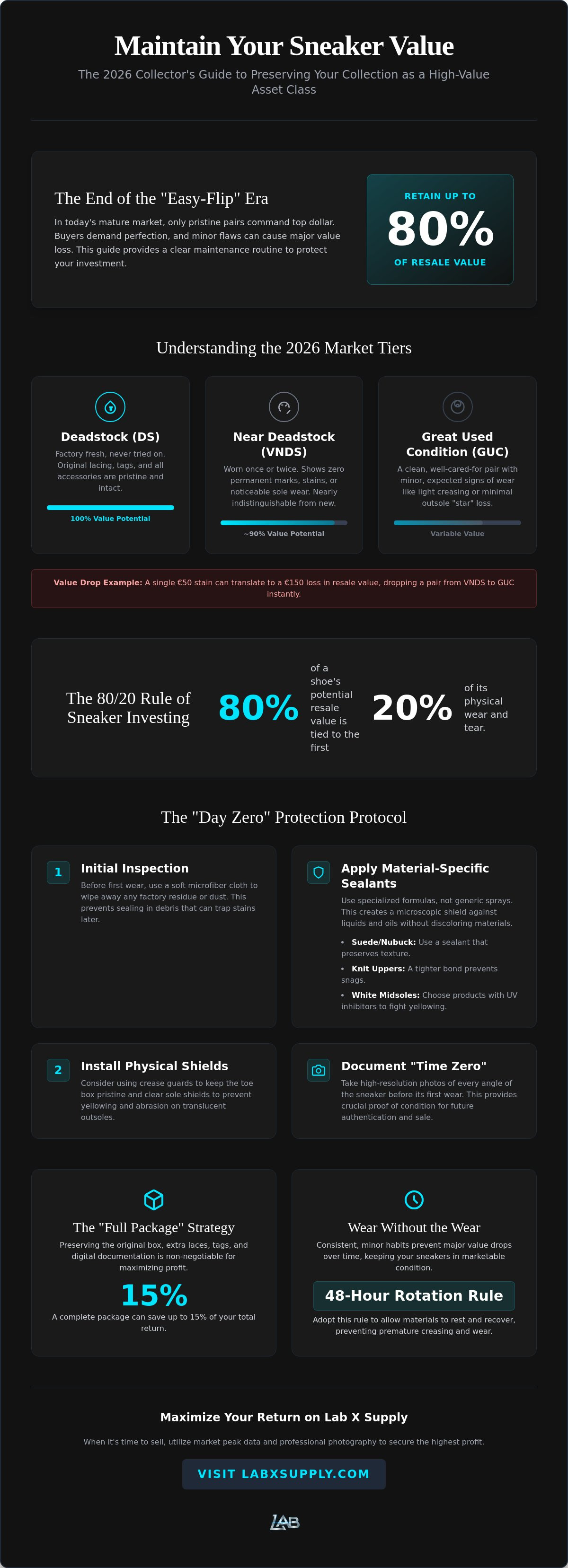
- Master the 2026 market tiers to understand exactly how to maintain sneaker value and avoid common pitfalls that slash resale prices.
- Implement a "day zero" protocol using material-specific sealants to protect your investment before you even take the first step.
- Preserve the "full package" by protecting the original box and digital documentation, which can save up to 15% of your total return.
- Adopt a 48-hour rotation rule and specific cleaning techniques to keep your sneakers in pristine, marketable condition without sacrificing wearability.
- Identify market peaks and utilize professional photography techniques to maximize your profit when it's time to sell.
Understanding the Sneaker Value Gap: Why Maintenance Matters in 2026
In the current market, sneaker resale value is defined as the percentage of the original MSRP or the market peak that a pair retains over time. It isn't just about what you paid; it's about what the next person is willing to pay. As the history of sneaker collecting shows, the shift from a hobby to an asset class means condition is everything. A single €50 stain from a spilled drink can easily translate to a €150 loss when you try to sell. Buyers in 2026 aren't just looking for a shoe; they're looking for a preserved asset.
Understanding how to maintain sneaker value starts with knowing the three primary market tiers collectors use to grade inventory:
- Deadstock (DS): Factory fresh, never tried on, with original lacing and all accessories intact.
- Near Deadstock (VNDS): Worn once or twice with zero permanent marks or noticeable sole wear.
- Great Used Condition (GUC): Clean pairs with minor creasing or light outsole "star" loss.
The psychology of the 2026 buyer is rooted in perfection. They'll pay a significant premium for "provenance," which includes original factory lacing and pristine packaging. When a shoe looks like it just left the factory, it triggers a higher emotional and financial valuation. This is why even the way you untie your laces matters for long term profit.
The 80/20 Rule of Sneaker Investing
Most of a sneaker's depreciation happens during the first few outings. The 80/20 rule suggests that 80% of a shoe's potential resale value is tied to the first 20% of its physical wear and tear. While a "beater" pair that's worn daily loses value rapidly, a carefully rotated pair stays in the VNDS tier for months. For popular silhouettes like Jordans or Yeezys, the "Value Floor" represents the baseline price the market will pay for a used pair in any wearable condition regardless of heavy use.
Market Volatility and Condition Grading
Grading standards have become incredibly strict due to high-resolution photography on resale platforms. Buyers now zoom in on the "star count" on the outsoles or check for the slightest hint of heel drag. If you want to trade up to rare, limited-edition releases, learning how to maintain sneaker value is the only way to keep your purchasing power high. Small maintenance habits today prevent the massive price drops that occur when a shoe falls from VNDS to GUC status. Consistent care ensures you aren't leaving money on the table when it's time to sell.
The First-Wear Protocol: Protecting Your Sneakers from Day Zero
The biggest mistake collectors make is assuming a pair is ready for the pavement the moment it leaves the box. The "factory dirt" myth suggests that new shoes are perfectly clean, but manufacturing residue and dust from the distribution center can actually trap stains later. If you want to know how to maintain sneaker value, your work starts before you even lace them up. A light surface check with a soft microfiber cloth ensures you aren't sealing in factory debris under your protective layers.
Selecting the right barrier is your first line of defense. While generic waterproofing sprays are common, 2026 collectors favor material-specific sealants. These formulas are designed for modern textiles like recycled mesh or transparent TPU without causing discoloration. By applying museum-level preservation techniques, you create a microscopic shield that repels liquids and oils. This step is vital because once a stain penetrates the fibers of a knit upper, the resale value can drop instantly.
Crease prevention is another polarizing topic. Crease guards can keep the toe box looking factory fresh, but they often change the fit and can cause internal wear on the lining. For high-value translucent outsoles, "sole shields" are a must. These clear films prevent the yellowing and abrasion that occurs the moment rubber hits concrete. Capturing "Time Zero" photos is the final step. These high-resolution shots of every angle prove the shoe's condition before wear, providing essential evidence for future authentication and sale.
Material-Specific Protection Strategies
Suede and nubuck require a delicate touch. Use a specialized sealant that protects without flattening the "nap" or texture of the leather. For knit uppers like Primeknit, focus on snag prevention. A tighter sealant bond helps keep loose fibers from catching on external objects. To combat "yellowing," look for products with UV inhibitors. This is especially critical for white midsoles and icy soles, which oxidize and turn yellow when exposed to sunlight over time.
The Pre-Wear Inspection
Before the first wear, inspect your pair for factory flaws like glue stains or uneven stitching. Documenting these early ensures they aren't blamed on your usage later. Carefully remove any hang tags using snips rather than pulling them, which can damage the eyelets. For more tips on what to look for, check out The Ultimate Guide to Authentic Sneakers in 2026. Once your inspection is complete, you can confidently step out knowing you've mastered how to maintain sneaker value from the start. If you're looking to add a fresh, protected pair to your rotation, explore the latest sneakers available now.
The "Full Package" Strategy: Preserving the Box and Accessories
Serious collectors know that the "product" includes everything that came inside the shipping container. In the 2026 resale market, a crushed or torn box isn't just an eyesore; it's a financial liability. A damaged box can slash 10-15% off the total resale price because it signals a lack of care to potential buyers. Realizing how to maintain sneaker value extends far beyond the rubber and leather. It requires protecting the cardboard housing from humidity, which can cause the structural integrity of the box to fail over time.
The "Paperwork Trail" is your most powerful tool for authentication. While digital receipts are common, physical invoices and packing slips add a layer of "provenance" that high-end collectors crave. Keep every extra lace set, branded dust bag, and even the specialized "Zip-ties" found on Off-White collaborations. Mastering how to maintain sneaker value requires treating these extras with the same reverence as the shoes themselves. If a buyer sees that you've kept the original tissue paper crisp and unwrinkled, they'll trust that the sneakers were handled with equal precision.
Storage environments are the silent killers of value. Cardboard is naturally acidic, and when combined with high humidity or direct sunlight, it can lead to "box tan" or color transfer onto the midsoles. Never store your collection in a garage or attic. These areas suffer from extreme temperature swings that can accelerate the breakdown of glue and foam. Instead, choose a climate-controlled space where the air remains dry and the temperature is consistent.
To ensure your collection's environment remains pristine and free of dust, you might check out AlphaLux Cleaning for professional residential maintenance services.
Storage Best Practices
Moisture is the enemy of longevity. Toss a few silica gel packs into each box to prevent moisture buildup, which is the leading cause of crumbling midsoles in older pairs. For your most valuable "grails," consider the "Box-in-Box" method for long-term vaulting. Place the original sneaker box inside a larger, acid-free plastic container or a sturdy shipping box. This creates a secondary barrier against dust, pests, and accidental corner dents during handling.
Provenance and Digital Authentication
Organize your collection like a financial portfolio. Just as professional traders use specialized tools like an SPX to SPY Converter to manage their market positions, you should save every digital order confirmation and shipping notification into a dedicated "Sneaker Portfolio" folder in your cloud storage. In 2026, the term "OG All" (Original Everything) is the gold standard for listings. If you are missing even a small accessory, it can be a major red flag for buyers. For example, a missing lace-swap bag is a red flag for buyers because it suggests the owner didn't value the "asset package" or, worse, that the pair might be a high-quality replica missing its secondary components.
Daily Maintenance and Rotation: How to Wear Without the Wear
Wearing your sneakers doesn't mean you have to accept their inevitable decline. The secret to how to maintain sneaker value while enjoying your collection is a strict rotation schedule. Professional collectors follow the 48-hour rule; you should never wear the same pair two days in a row. This gap allows the foam in the midsole to fully decompress and the materials to air out. Constant wear leads to permanent compression lines and accelerated glue failure, both of which are red flags for future buyers.
Cleaning habits should be proactive rather than reactive. Differentiate between dry and wet cleaning to avoid unnecessary material stress. A soft-bristled brush should be your first tool for removing surface dust before it settles into the fabric. Only use wet wipes or cleaning solutions when a dry brush fails to remove a mark. Over-saturating a shoe with liquid can weaken the bond between the upper and the sole, leading to separation over time.
Preserving the internal branding is a subtle but vital part of how to maintain sneaker value. If you plan to sell the pair later, use aftermarket insoles. This prevents your foot from rubbing off the "Nike Air" or "Yeezy" logos on the original footbed. Additionally, odor prevention is about more than just smell. Moisture leads to bacterial growth and material breakdown. Cedar shoe trees are essential because they maintain the shoe's shape while naturally absorbing the sweat that accumulates during a day of wear.
Cleaning Different Silhouettes
Cleaning the "Slide Series" requires a different approach than traditional footwear. Foam runners and slides have softer surfaces that scratch easily if you use abrasive brushes. Use a soft microfiber cloth and lukewarm water to maintain the matte finish of these silhouettes. For a deeper look at these designs, read The Evolution of the Slide Series. When dealing with knit versus leather, remember that knit requires a "blotting" motion to avoid fraying fibers, while leather can handle a gentle circular scrub.
Midsole and Outsole Care
The "Toothbrush Technique" is the most effective way to reach deep tread patterns without damaging the rubber. When dealing with scuffing on white midsoles, a magic eraser works well for stubborn marks, but use a specialized sneaker pen to touch up any permanent paint loss. For vintage pairs, preventing the "crumbling" of polyurethane midsoles is about climate control. Occasional, gentle wear actually helps keep these materials flexible by preventing the buildup of moisture within the foam cells. If you are looking for a fresh pair to start your rotation, explore the new sneakers and slides available now.
Maximizing Your Return: When and How to Sell on Lab X Supply
You've spent months following strict rotation rules and preservation protocols. Now comes the final step in the asset lifecycle: converting that condition into capital. Knowing how to maintain sneaker value is only half the battle; you also need to know when the market is ready for your pair. Timing is just as critical as condition. Selling during a massive restock will tank your profits. Instead, identify when a silhouette has reached its peak resale value by watching for "dry periods" when supply is low but demand remains high.
Photography is your primary sales tool. You don't need a professional studio to get "Studio Quality" results. A smartphone and a source of natural light are enough to show off your hard work. High-contrast photos that highlight the crispness of the leather or the clean "nap" of the suede prove to the buyer that you know how to maintain sneaker value. Transparency wins in the 2026 market. If there's a microscopic scuff or a faint crease, disclose it. This honesty builds immediate trust and prevents the headache of a returned item or a disputed sale later.
The Lab X Supply advantage lies in our dedicated audience of collectors who value authenticity and condition. When you list your sneakers here, you aren't just selling to a random buyer; you're connecting with a community that understands the premium associated with a well-maintained pair. Your commitment to the "Full Package" strategy discussed earlier will finally pay off as buyers recognize the value of your preserved box and original accessories.
Preparing Your Listing
Every serious buyer wants to see five essential angles: the lateral side, the medial side, the heel, the toe box, and the outsoles. Your description should be a highlight reel of your maintenance routine. Mention the use of cedar shoe trees, your rotation schedule, and the fact that the original insoles were never stepped on. Before you take that final outsole photo, give the tread one last dry brush to remove any stray dust or debris. This final touch can be the difference between a "Great Used Condition" and a "Near Deadstock" price tag.
Closing the Deal
Shipping safely is the final hurdle. Double-boxing is non-negotiable for collectors. If you ship a shoe in just its original box, you're risking a 15% value drop due to corner dents or shipping labels being stuck directly to the cardboard. Use bubble wrap to fill any gaps in the outer shipping box so the inner box doesn't slide around. Building a "Trusted Seller" reputation through consistent condition grading ensures that your future listings sell faster and for higher prices. Ready to upgrade your collection? Browse our latest authentic sneakers at Lab X Supply.
Mastering Your Collection for the Long Haul
Treating your footwear as a financial asset requires a shift in mindset. By implementing a "Day Zero" protection protocol and adhering to a strict 48-hour rotation rule, you'll ensure that your sneakers remain in the top market tiers. We've explored how preserving the original box and digital provenance can save you from significant price drops during resale. Learning how to maintain sneaker value is a continuous process of discipline and detail; the payoff is a collection that funds its own growth.
When you're ready to put these preservation skills to the test with a fresh pair, we're here to help. At Lab X Supply, we offer a curated selection of 2026's top-trending styles with global shipping and 100% Authenticity Guaranteed. You can shop with confidence knowing your next "grail" is the real deal. Secure your next investment at Lab X Supply and start building a portfolio that stands the test of time. Your future self, and your bank account, will thank you for the care you put in today.
Frequently Asked Questions
Does wearing my sneakers once automatically lower the value?
Yes, wearing a pair just once shifts its market status from "Deadstock" to "Near Deadstock," which can immediately lower the price by 10% to 20%. While the value drops, you can still command a high price by ensuring the outsoles remain spotless and the internal branding stays intact. Learning how to maintain sneaker value through these small details helps you recoup most of your initial investment even after a light wear.
What is the best way to prevent creases in my Jordan 1s?
The most effective method is using plastic crease guards combined with a strict 48-hour rotation. Crease guards provide internal structure to the toe box while you walk, preventing the leather from collapsing. Allowing the shoes to rest between wears gives the material time to decompress, which stops minor surface lines from turning into deep, permanent cracks that turn off future buyers.
Should I keep the authentication tags on the shoes?
You should remove third-party authentication tags before wearing your sneakers, but always keep them inside the original box. While the tags prove the shoes were once verified, wearing them with the tag attached doesn't add financial value and is often frowned upon by the community. Keeping the tag as part of your "paperwork trail" is what actually helps verify the pair's history during a future sale.
How much does a missing original box affect the resale price?
A missing original box typically slashes the resale price by 15% to 25% depending on the rarity of the silhouette. Collectors view the box as a vital component of the "complete asset package." Without it, your listing is often ignored by high-end buyers and relegated to the "budget" tier, making it much harder to reach your target profit margins.
Can I use a washing machine to clean my expensive sneakers?
You should never use a washing machine for high-value sneakers. The heat can melt the glue holding the sole together, while the tumbling action can warp the overall shape and scratch delicate materials like leather or suede. Stick to the hand-cleaning methods discussed in this guide, using soft brushes and microfiber cloths to preserve the structural integrity of your investment.
How do I stop my white sneaker soles from turning yellow?
You can stop yellowing by applying a specialized UV-protectant sealant and storing your pairs in a dark, cool environment. Oxidation is a chemical reaction triggered by light and humidity that turns white midsoles and icy outsoles yellow. Consistent application of protectants and avoiding sunlight is essential if you want to know how to maintain sneaker value for white silhouettes over several years.
Is it better to store sneakers in clear plastic bins or the original box?
Clear plastic bins are better for daily organization and visibility, but the original box is superior for long-term value. If you prefer using bins for your display, make sure to flatten and store the original boxes in a dry, climate-controlled area. Having the original box ready for the next buyer is a non-negotiable requirement for maximizing your return on the secondary market.
What cleaning products are safe for Yeezy Slides and Foam Runners?
Use mild dish soap and a soft microfiber cloth for foam-based footwear like slides. Avoid harsh chemicals or stiff-bristled brushes that can permanently scratch or dull the matte finish of the foam. Since these items don't have traditional fabric uppers, a gentle wipe-down after each wear is usually enough to prevent dirt from staining the porous surface of the material.