
Your choice of lacing is the single most important factor in whether your Air Jordan 1s look like a curated masterpiece or a sloppy mess. Learning how to lace jordan 1s is the final step of sneaker curation. The right technique transforms a standard retail pair into a personal statement that reflects your unique style.
You probably spent a significant amount of effort securing an authentic pair from Lab X Supply, perhaps the 2026 "Love The Game" High OG or the returning "Royal" classic. It's frustrating when the laces are too long and dangle awkwardly, or when the tongue slides to the side and ruins the shoe's silhouette. You might want that effortless loose look, but you don't want the shoe to feel like it's falling off your foot with every step. Authenticity matters, and the way you present your footwear should reflect that quality.
We'll help you master every style from the classic factory knot to the modern loose-lace look to make your Jordans stand out. This guide provides a clean, aesthetic approach to lacing that eliminates the need for constant re-tying. You'll learn the specific steps for High, Mid, and Low silhouettes to ensure a proper fit that preserves the value and look of your authentic sneakers.
Key Takeaways
- Discover how lacing serves as a form of personal expression and navigate the debate between the "deadstock" and "worn" aesthetic for your collection.
- Learn how to lace jordan 1s using professional techniques like the clean Factory Lace or the effortless modern loose-look.
- Master the specific eyelet configurations for High, Mid, and Low silhouettes to ensure a perfect fit every time you step out.
- Identify the correct lace lengths and materials, such as waxed or cotton, to prevent dangling laces and keep the tongue from sliding.
- Understand why starting with an authentic pair from Lab X Supply is essential for maintaining the value and premium appearance of your sneakers.
Why Lacing Your Jordan 1s Is a Skill Every Collector Needs
Jordan 1s aren't just shoes; they're cultural artifacts. Since the beginning of Air Jordan history, collectors have obsessed over every detail of this iconic silhouette. Mastering how to lace jordan 1s is about more than just securing the shoe to your foot. It's an act of style curation. Whether you're unboxing a fresh pair from Lab X Supply or reviving a classic colorway, your lacing choice signals your place within the sneaker community. It tells the world whether you value the history of the court or the energy of the street.
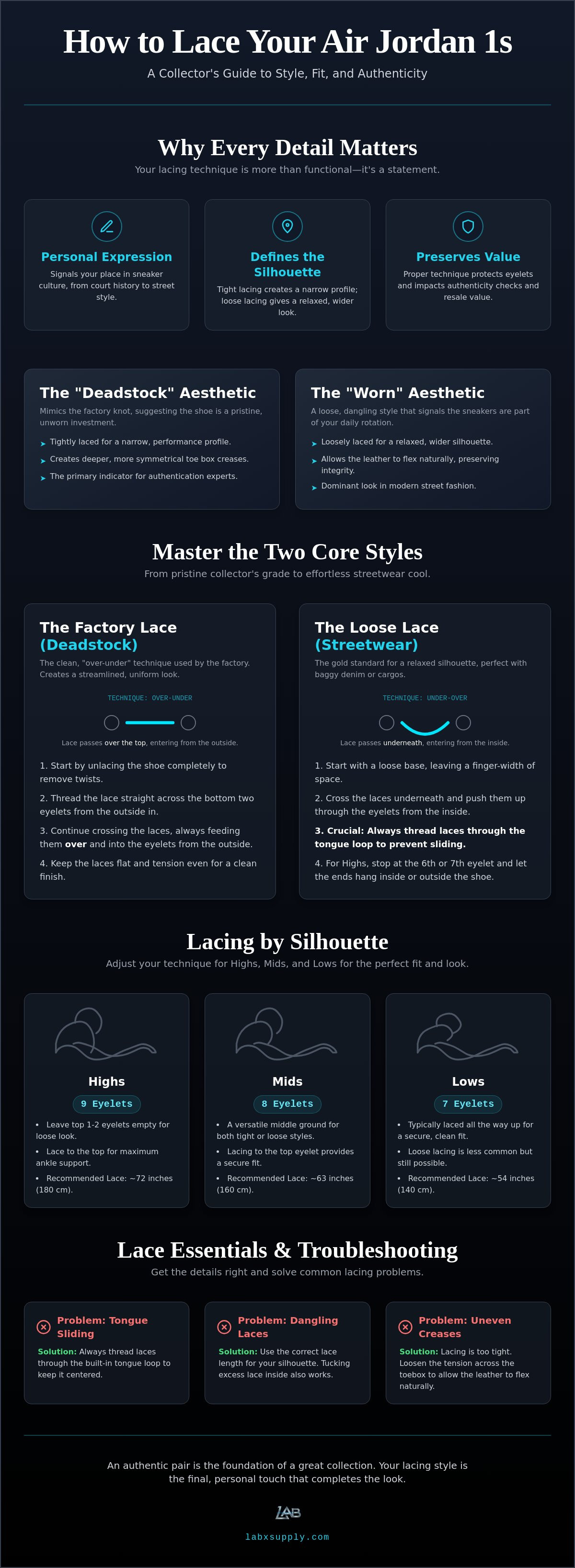
The "deadstock" versus "worn" debate often centers on the laces. A deadstock look mimics the factory knot, suggesting the shoe is a pristine investment. Conversely, a loose, dangling lace style signals that the sneakers are meant for the pavement. Beyond aesthetics, lacing tension directly impacts the "crease-ability" of the toe box. Tight lacing pulls the leather taut, often leading to deeper, more symmetrical creases. Looser lacing allows the material to flex naturally, which some collectors believe preserves the leather's integrity over time. Authentic sneakers deserve a deliberate touch rather than a rushed factory job that doesn't account for your foot shape or style preference.
The Aesthetic Impact of Different Lacing Techniques
Your lacing style dictates the shoe's silhouette. Tight lacing creates a narrow, performance-focused profile that looks best with tapered joggers or athletic gear. This style provides maximum ankle support, especially for Highs. On the other hand, the "loose lace" look has dominated street fashion throughout the 2020s. By leaving the laces untied and slightly slack, you create a wider, more relaxed silhouette that pairs perfectly with baggy denim or oversized streetwear. It's a deliberate choice that says you're comfortable and confident in your rotation.
Lacing as a Component of Sneaker Authenticity
In the high-end resale market, every detail matters. Factory lacing is often a primary indicator during the authentication process. Experts look for the specific "over-under" pattern that Jordan Brand uses at the factory. When you learn how to lace jordan 1s properly, you also learn how to protect the shoe's physical components. Rough lacing can fray the eyelets or crack the plastic aglets, which negatively impacts the resale value. For those serious about their collection, understanding these nuances is vital. You can find more about maintaining your collection in The Ultimate Guide to Authentic Sneakers in 2026. Preserving these details ensures your pair remains a high-value asset for years to come.
Step-by-Step: The Most Popular Ways to Lace Jordan 1s
Before you begin threading, you need a clean slate. When you unbox a fresh pair from Lab X Supply, the laces often come tightly stuffed or partially threaded. Remove them completely to ensure there are no twists or tangles. This preparation stage allows you to inspect the eyelets and ensure the tongue is centered. A flat, untwisted lace is the foundation of any professional look. Learning how to lace jordan 1s properly starts with this attention to detail, ensuring the final result looks intentional rather than rushed.
The "Factory Lace," also known as the deadstock look, is a cornerstone of sneaker collecting culture. It suggests the shoe is in pristine, unworn condition. To replicate this, use an "over-under" technique. Push the lace through the eyelet from the outside in, so the lace sits flat across the top of the leather. This creates a streamlined, uniform appearance across the midfoot. If you're looking to add a new pair to your rotation to practice these techniques, you can find a curated selection of authentic sneakers at Lab X Supply.
How to Master the Loose Lace Look
The loose lace style is the gold standard for modern streetwear. It provides a relaxed silhouette that complements baggy denim or cargos perfectly. Follow these steps for the best results:
- Step 1: Start at the bottom eyelets with a very loose base. Ensure there's about a finger-width of space between the lace and the tongue to prevent the leather from pinching.
- Step 2: Always thread the laces through the tongue loop. This is a critical step that many beginners skip. It keeps the tongue from sliding to the side as you walk, maintaining the shoe's symmetry.
- Step 3: Stop threading at the 7th or 8th eyelet. Let the remaining lace dangle naturally. This "sweet spot" provides enough length for a stylish hang without the laces dragging on the ground.
The Clean "Bar Lacing" Technique
Bar lacing offers a minimalist, high-fashion aesthetic that removes the traditional "X" pattern from the shoe's face. To achieve this, thread the lace into the first eyelets from the top down. Then, take one end and bring it up through the second eyelet on the same side before pulling it across to the opposite second eyelet. Repeat this "ladder" movement until you reach the top. This technique creates clean, horizontal lines that emphasize the Jordan 1's sleek design. To manage excess length at the top, tuck the remaining lace ends behind the tongue or under the insole for a completely "untied" look that stays secure all day. Master how to lace jordan 1s with this method when you want your footwear to look as sharp as a tailored suit.
Silhouette Specifics: Lacing Highs, Mids, and Lows
Every silhouette in the Air Jordan 1 family offers a different canvas for your laces. While many generic guides suggest lacing is universal, the reality of how to lace jordan 1s depends entirely on the eyelet count and tongue height. A High-top features a 9-eyelet system, providing the most versatility for complex patterns or extreme "dangle" looks. In contrast, the Mid usually has 8 eyelets, while the Low typically features 7. These differences aren't just aesthetic; they dictate how much lace length you have to work with and where the pressure points sit on your foot. Because the tongue on a High-top sits significantly higher than on a Low, the point where you finish your laces determines the entire visual balance of the sneaker.
For the Jordan 1 Mid, the 8th eyelet is widely considered the "sweet spot." Lacing to this point provides enough security for daily wear without the restrictive feeling of a full High-top. For the Jordan 1 Low, the challenge is managing the shorter lace span. Because there's less distance between the eyelets, traditional knots can look disproportionately bulky. It's often better to use a shorter lace or a hidden knot technique to maintain the Low's sleek, aerodynamic profile. When you purchase an authentic pair from Lab X Supply, you'll notice the factory lacing is tailored to these specific heights, and your custom lacing should respect those proportions to maintain a high-end look.
High-Top Lacing: To the Top or Not?
Lacing to the 9th eyelet on a High-top provides a locked-in, performance-focused feel, but it can make the ankle area look stiff. Most collectors prefer stopping at the 8th eyelet. This allows the "wings" of the shoe to flare out slightly, creating a layered, dimensional look that's iconic to the silhouette. If you're going for a relaxed streetwear vibe, leaving the top two eyelets empty allows for a "collar fold." This is where the top of the shoe naturally opens up as you move, giving off an effortless energy that pairs well with loose-fitting trousers.
Jordan 1 Low: The "Casual Loop" Method
The Low silhouette thrives with a cleaner, tighter lace than its taller counterparts. To prevent heel slip, which is common in Lows, you can use the extra eyelets to create a runner's loop. This provides a secure fit without needing to crank the laces down across the midfoot. For a style upgrade, many enthusiasts swap the standard flat laces for thin rope laces. This small change adds a premium, custom feel to your Lows. If you don't have a pair to experiment with yet, Lab X Supply offers a curated selection of authentic Jordan 1 Lows that are perfect for testing these techniques.
Lace Lengths, Materials, and Troubleshooting
Getting the technical details right is just as important as the pattern you choose. If you've ever wondered why your "loose look" doesn't quite match the photos online, it usually comes down to the physical specs of the laces. Mastering how to lace jordan 1s effectively requires understanding the specific requirements of your silhouette. Standard lace lengths for Jordan 1s are 72 inches for Highs, 63 inches for Mids, and 54 inches for Lows. These measurements ensure you have enough slack to experiment with different styles without having to tuck away massive amounts of excess material.
Material choice significantly changes the shoe's personality. Traditional cotton laces offer the original 1985 feel and are the easiest to keep tied. Waxed laces provide a more structured, premium aesthetic that holds its shape well, making them ideal for the "loose lace" look. Polyester laces are often found on modern performance pairs; they're resilient but can be slippery. Before you swap your laces, ensure you're starting with a genuine pair. You can find the latest authentic sneakers at Lab X Supply to ensure your collection maintains its value and correct factory proportions.
Twisted laces are a common headache that ruins a clean aesthetic. To fix this, use the "flat-finger" technique: hold the lace perfectly flat between your thumb and index finger as you pull it through each eyelet. If you struggle with "lace migration"—where the tongue slides to the side—it's often a tension issue. Aside from using the tongue loop, ensure the tension at the bottom three eyelets is even. This creates a stable foundation that keeps the tongue centered throughout the day.
Choosing the Right Lace Length for Your Style
Your desired look dictates whether you should stick to standard lengths. If you want the ultra-loose, dangling style on a pair of High-tops, the 72-inch lace is mandatory. It provides the necessary length to reach the 8th eyelet while leaving enough "hang." However, if you prefer a Mid with a clean, tied knot, you might actually want to downsize to a 63-inch lace. This prevents a bulky, oversized bow that distracts from the shoe's collar. Replacement laces that match original Jordan colorways are widely available, but always verify the length before purchasing.
Common Lacing Faux Pas to Avoid
One of the biggest mistakes is over-tightening the bottom eyelets. This creates a "choked" look that distorts the toe box and makes the leather more prone to aggressive creasing. Another frequent error is starting with uneven lace lengths. Always center your laces at the first eyelets by pulling both ends upward to meet; if they aren't even from the start, the entire pattern will be lopsided by the time you reach the top. Finally, avoid mixing lace materials on a single pair. Using a waxed lace on one shoe and a cotton lace on the other creates a subtle but noticeable visual imbalance that detracts from a curated look.
Completing Your Rotation with Lab X Supply
You've mastered the technical side of how to lace jordan 1s, but even the most professional lacing job can't hide a low-quality shoe. The foundation of a great look is always an authentic pair. When you source your sneakers from Lab X Supply, you're starting with a product that meets exact factory specifications. This ensures that every eyelet is positioned correctly and the leather has the proper structural integrity to hold your chosen lacing style. Whether you're rocking the upcoming "Love The Game" High OG or a classic "Royal" retro, the quality of the sneaker dictates how well your lacing will perform throughout the day.
When your new pair arrives, take a moment to inspect the factory lacing for quality control. This isn't just about checking for loose threads; it's about understanding the original intent of the designers. In 2026, buying from trusted sneaker stores is more important than ever as the resale market continues to evolve. Before you unlace the factory knot, check the symmetry of the eyelets and the tension across the bridge. Once you're satisfied, perform a final "vibe check." Does your lacing style match the colorway? A high-contrast "Banned" colorway might demand a more aggressive, loose look, while a neutral Mid silhouette might benefit from a clean, minimalist bar lacing technique.
Why Authenticity Is the Foundation of Style
In the world of high-end sneakers, replicas are a constant concern. These lower-quality pairs often fail the "lacing test" because of incorrect eyelet spacing or poorly finished lace holes. If the eyelets aren't perfectly aligned, your lacing pattern will look crooked no matter how much effort you put into it. Lab X Supply’s commitment to genuine Jordan 1s and slides means you never have to worry about these manufacturing flaws. Building a collection that retains its value requires more than just proper care; it requires starting with a genuine asset. Proper lacing preserves the leather and prevents unnecessary stretching, ensuring your sneakers remain a high-value part of your rotation for years.
Ready to Lace Up a New Pair?
The Air Jordan 1 remains the most versatile sneaker in history for custom lacing. Its high eyelet count and iconic panels provide endless opportunities to express your personal style. If you're ready to put your new skills to the test, explore the latest arrivals at Lab X Supply. From the most anticipated High OG drops to versatile Mids, you'll find a curated selection of authentic footwear that is ready for your unique touch. Master how to lace jordan 1s with a fresh pair and elevate your sneaker game today.
Shop the latest authentic Jordan 1s at Lab X Supply
Master Your Look with the Perfect Lace
Lacing is more than a utility; it's the final step in curating a sneaker that feels truly yours. By mastering how to lace jordan 1s, you ensure your footwear looks intentional whether you're aiming for a pristine factory finish or a relaxed streetwear vibe. Remember that the specific silhouette matters. Whether you're navigating the 9-eyelet system of a High or the shorter span of a Low, the right tension and material choice preserve both the comfort and the long-term value of your sneakers. Avoiding common mistakes like over-tightening the bottom eyelets will keep your leather looking fresh and minimize aggressive creasing.
The most professional lacing job won't matter if the shoes aren't the real deal. Lab X Supply provides a wide selection of rare and trending styles, with authenticity guaranteed on every single pair. Trusted by sneaker collectors worldwide, we focus on delivering genuine footwear that stands up to scrutiny. Ready to put your new skills to work? Upgrade your sneaker rotation with authentic Jordan 1s at Lab X Supply. Grab a fresh pair today and start experimenting with your new signature style.
Frequently Asked Questions
How long are Jordan 1 High laces?
Standard Air Jordan 1 High laces are 72 inches (183 cm) long. This specific length is designed to accommodate the 9-eyelet system found on the High silhouette. It provides enough slack for a traditional tie at the top or a stylish loose-lace look. Using shorter laces on Highs often results in not having enough material to reach the upper collar comfortably.
Should I lace my Jordan 1s all the way to the top eyelet?
Choosing whether to lace to the 9th eyelet depends on your preference for stability versus style. Lacing to the very top provides maximum ankle support for athletic activities or a very secure fit. However, most sneakerheads stop at the 8th eyelet to allow the "wings" to flare. This creates a more relaxed silhouette that's synonymous with modern streetwear culture.
How do you loose lace Jordan 1s so they don’t fall off?
To loose lace Jordan 1s without sacrificing security, keep the tension firm through the first three eyelets near the toe box. This anchors the foot while allowing the upper laces to remain slack. Learning how to lace jordan 1s this way ensures the shoe stays on your foot throughout the day. Always thread the laces through the tongue loop to provide additional structural support.
Do Jordan 1 Mids and Highs use the same length laces?
Jordan 1 Mids and Highs require different lace lengths due to their eyelet counts. Mids typically use 63-inch (160 cm) laces to fit their 8-eyelet design. Highs need the extra length of a 72-inch lace for their 9-eyelet system. Swapping them can lead to laces being either too short to tie at the top or excessively long and messy for the Mid silhouette.
How do I stop my Jordan 1 tongue from sliding to the side?
Utilizing the built-in lace loop on the tongue is the most effective way to prevent sliding. Thread your laces through this loop as you move from the midfoot eyelets to the collar. This keeps the tongue centered against your shin as you walk. If it still moves, ensure your lacing tension is even on both the left and right sides of the shoe.
Is it better to lace Jordan 1s over or under the eyelets?
Most enthusiasts prefer the "over-under" method, where the lace enters the eyelet from the outside. This technique creates a flatter, cleaner appearance across the top of the shoe. It's the standard factory style for authentic pairs found at Lab X Supply. Lacing from the inside out can make the pattern look bulky and less streamlined against the leather panels.
Can I use the same lacing techniques for Yeezy slides?
You cannot use these lacing techniques for slides because they're a single-piece construction without eyelets or laces. While Lab X Supply sells both sneakers and slides, the customization options for slides focus on sock pairings rather than lacing. These specific lacing guides are tailored for the multi-paneled construction of the Jordan 1 series to ensure a proper and aesthetic fit.
How do I keep my Jordan 1 laces from twisting?
Preventing twists requires a deliberate approach as you learn how to lace jordan 1s for a clean look. Hold the lace flat between your thumb and forefinger as you pull it through every eyelet. This ensures the material doesn't rotate mid-pull. If a twist occurs, unthread that specific section and restart to maintain a professional, flat aesthetic across the entire face of the shoe.