
Tossing your premium leather sneakers into a washing machine is the fastest way to turn a high-end investment into a cracked, yellowing mess. While it's tempting to seek a quick fix, aggressive automated cycles often destroy the delicate bonds in the leather and cause permanent structural damage. You want that crisp, out-of-the-box glow, but stubborn scuffs and the dreaded yellowing of the soles make it feel like your favorite pair is past its prime. It's a common frustration for collectors who fear ruining expensive authentic kicks with the wrong chemicals.
Learning how to clean white leather sneakers using professional hand-cleaning methods is the only way to ensure they stay "box-fresh" for years. We agree that your footwear should look as sharp as the day you bought it. This guide promises to teach you the expert techniques required to restore a like-new appearance while keeping the leather soft and supple. You'll discover the essential 2026 tool kit, including top-rated products like Grandma's Secret Sneaker Cleaner, and master the step-by-step restoration process that preserves your pair's maximum resale value.
Key Takeaways
- Understand why traditional washing methods cause yellowing and how professional care protects the leather's structural integrity.
- Identify the specific brush types and 2026 cleaning agents needed to build a professional-grade home maintenance kit.
- Master the safe step-by-step process for how to clean white leather sneakers to ensure a deep clean without damaging the material.
- Learn advanced restoration tactics for removing scuffs and brightening mid-soles without stripping the factory finish.
- Implement post-clean conditioning and drying rules that keep leather supple and preserve the long-term resale value of your pair.
Why Proper Cleaning is Essential for White Leather Sneakers
White leather isn't just a style choice; it's a commitment to maintenance. Unlike darker materials, white leather shows every microscopic detail of wear, from city dust to grass stains. The primary threat to your footwear is oxidation. When the leather's protective finish is exposed to oxygen and UV light over time, a chemical reaction occurs that turns the crisp white into a dull, aged yellow. This yellowing isn't just an aesthetic problem. It often indicates that the leather fibers are becoming brittle. If you don't master how to clean white leather sneakers properly, you risk permanent discoloration that no amount of scrubbing can fix.
Dirt buildup acts like sandpaper on the structural integrity of your shoes. Every time you walk, trapped grit grinds against the leather's grain, creating tiny tears and deep-set cracks. Surface grime is relatively easy to manage with a quick wipe, but deep-set stains occur when pollutants migrate into the leather's pores. Once those particles are embedded, they attract moisture and bacteria, which can rot the stitching from the inside out. Consistent care prevents these particles from settling, ensuring your pair remains structurally sound for years rather than months.
The Anatomy of White Leather
Understanding your materials is the first step in professional care. Full-grain leather is the highest quality and most durable, but its porous nature means it absorbs environmental pollutants quickly. Top-grain leather is slightly more resistant due to its sanded finish, while synthetic leathers often feature a plastic coating that requires different handling entirely. Because leather is an organic material, it has a specific pH balance that must be maintained. Using harsh household detergents can strip away essential oils, making understanding shoe polish and pH-neutral cleaners vital for any serious collector. These specialized products clean the surface without compromising the hide's natural flexibility.
The Resale Value Factor
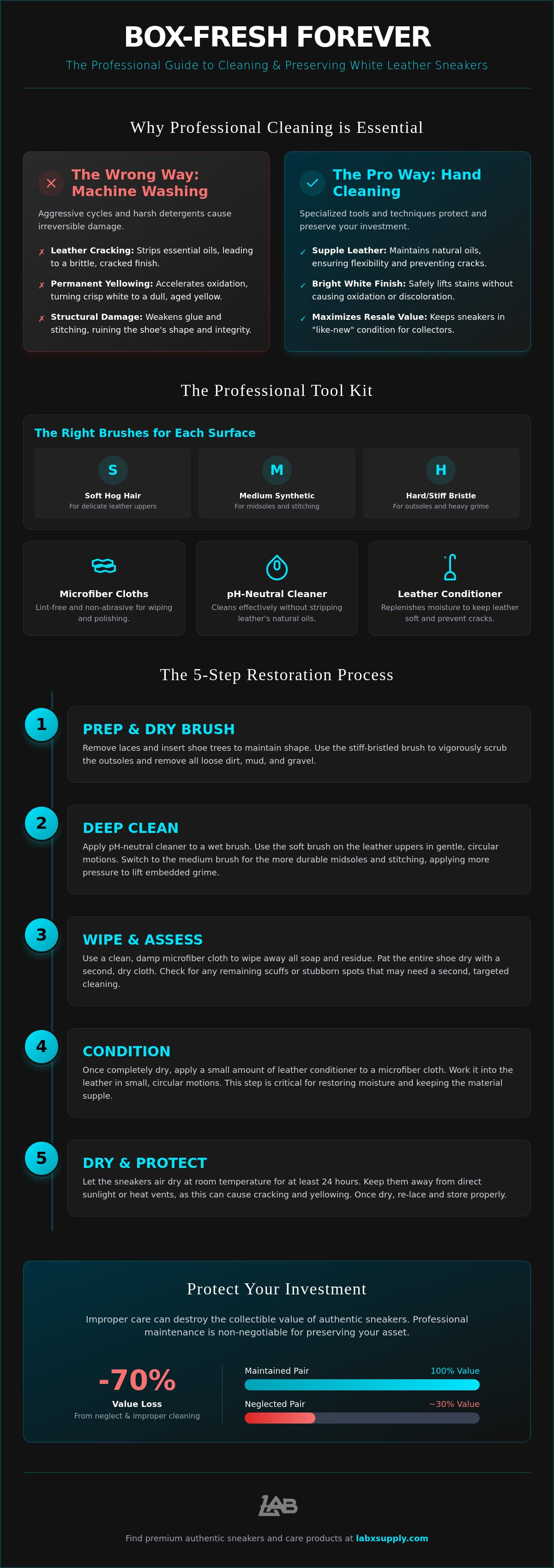
In 2026, the global shoe care market is valued at approximately $5.0 billion, driven largely by the "sneakerhead" culture that treats footwear as a financial asset. If you plan to trade or sell your pair later, maintaining a "Deadstock" or "Like-New" appearance is mandatory. High-end authentic sneakers can lose up to 70% of their resale value if the leather shows signs of neglect or improper cleaning. Professional-grade maintenance ensures that the mid-soles stay bright and the upper remains supple, allowing you to command top-tier prices on resale platforms. Beyond the financial return, wearing pristine footwear has a significant psychological impact, projecting a sense of discipline and attention to detail that elevates your entire personal style.
The Professional Tool Kit: What You Need Before You Start
Gathering the right equipment is the difference between a successful restoration and a ruined finish. The modern sneakerhead kit has evolved beyond simple soap and water to include specialized tools designed for specific materials. High-quality microfiber cloths are essential because they lift dirt without leaving behind lint or abrasive fibers that can scratch the leather's surface. You should also have shoe trees on hand. They maintain the shoe's shape and provide a firm surface to scrub against, which is vital when learning how to clean white leather sneakers effectively.
A dedicated leather conditioner is a non-negotiable part of this kit. Cleaning agents often strip away the natural oils that keep leather flexible. Without reintroducing these oils, your sneakers will eventually crack at the flex points. For minor scuffs on the rubber portions, specialized erasers can provide a quick fix, but use them sparingly on the leather itself to avoid dulling the factory finish. Keeping your collection in top shape is easier when you start with high-quality sneakers from the beginning.
Choosing the Right Brushes
Not all brushes are created equal. A soft hog hair brush is necessary for the delicate leather upper to prevent micro-scratches during the cleaning process. For the mid-soles and heavy stitching where dirt gets trapped, a medium-bristled synthetic brush provides the extra agitation needed. Finally, keep a stiff-bristled brush exclusively for the outsoles to remove stubborn mud and gravel. Using the wrong brush on the wrong section is a common mistake that can lead to permanent texture changes in the leather grain.
Cleaning Solutions: DIY vs. Specialized
While Wirecutter's sneaker cleaning guide suggests that mild dish soaps can work in a pinch, they are often too alkaline for premium hides. Professional sneaker solutions are pH-balanced to protect the leather's integrity and prevent the drying that leads to cracks. Never use bleach on white leather. It doesn't actually clean the material; instead, it causes a chemical reaction that turns the leather a permanent, sickly yellow. If you want a box-fresh look, stick to solutions specifically formulated for footwear. Knowing how to clean white leather sneakers safely means respecting the chemistry of the material.
Step-by-Step: How to Clean White Leather Sneakers Safely
Many amateur guides suggest using a washing machine for convenience. This is a high-risk mistake for premium footwear. The heat and agitation of a machine cycle can warp the sole and cause the leather to peel or crack. To master how to clean white leather sneakers, you must commit to a manual, controlled process. Start by removing the laces and inserting shoe trees. This setup provides the necessary tension to the upper. It ensures you can scrub effectively without the leather collapsing or creasing under the pressure of your brush.
The first active step is dry brushing. Use a soft-bristled brush to sweep away loose surface debris, dust, and dried mud. Skipping this phase is a common error that leads to permanent staining. If you apply moisture to a dusty shoe, you create a thin layer of mud that gets pushed deeper into the leather's grain. Once the surface is clear, prepare your cleaning solution. Dip your brush into the water and solution, then shake off the excess. You want a thick foam rather than a dripping wet brush. Excess water is the enemy of leather integrity and can lead to unappealing water spots.
Apply the brush to the shoe using small, circular motions. Start with the uppers and move toward the mid-soles. Manage your pressure carefully. The goal is to let the bristles and the foam lift the dirt, not to grind the brush into the material. After scrubbing a small section, use a clean microfiber cloth to wipe away the dirty suds immediately. This prevents the grime from being re-absorbed into the pores as the leather dries. Repeat this process until the entire shoe is clean, focusing on one panel at a time to maintain control.
Handling Different Leather Textures
Smooth leather requires a gentle touch and minimal pressure to avoid scuffing the factory finish. In contrast, pebbled or tumbled leather features deep crevices that trap dirt. For these textures, you must angle your brush to ensure the bristles reach into the valleys of the grain. When learning how to clean white leather sneakers with varied textures, don't forget the tongue. Clean the inner lining with a damp cloth rather than a brush. This prevents you from soaking the internal foam, which can take days to dry and may develop odors if moisture remains trapped inside.
Lace Maintenance
Dirty laces often ruin the appearance of a clean shoe. Remove them and soak them in a bowl of warm water mixed with a specialized cleaner. Agitate the laces by rubbing them against each other to lift deep-set stains. If the laces are frayed or the plastic tips are cracked, consider buying a fresh pair. Replacing the laces is the most cost-effective way to achieve that "box-fresh" aesthetic. Hang the laces to air dry naturally. Avoid using a dryer. High heat can cause cotton laces to shrink or synthetic fibers to fray and lose their elasticity.
Advanced Techniques: Removing Scuffs and Restoring Mid-Soles
Many collectors believe scuffs are permanent damage that ruins a shoe's resale value. In reality, most surface marks are simply transfers of material from another object onto your leather. If you are mastering how to clean white leather sneakers, you need to distinguish between a surface scuff and a deep gouge. For light marks, a simple white pencil eraser often works wonders. It lifts the transfer without the need for moisture or chemicals. If the mark persists, the debate over melamine foam, commonly known as a Magic Eraser, comes into play. While effective on rubber mid-soles, it is essentially ultra-fine sandpaper. Use it with extreme caution on the leather upper. Over-scrubbing with melamine foam will strip away the factory finish and leave the leather dull and prone to cracking.
Restoring the "icy" white look to a mid-sole that has started to yellow requires more than just soap. This yellowing is usually the result of oxidation from UV exposure. To combat this, professional restorers use de-oxidizing creams like Angelus Sole Bright, which was verified in April 2026 as a leading solution for removing sole yellowing. These products, when applied and left to cure under UV light, can reverse the chemical reaction that causes the color change. If you want to keep your sneakers looking pristine, addressing these advanced issues is just as important as the initial wash.
The Scuff Removal Protocol
- Light Marks: Use a high-quality white pencil eraser. Rub gently in one direction to lift the scuff.
- Deep Gouges: If the leather itself is torn, a leather touch-up pen or specialized white leather paint can fill the gap. Apply in thin layers and let it dry completely.
- Buffing: After removing a scuff, use a clean microfiber cloth to buff the area. This helps the treated spot blend back into the surrounding leather sheen.
Mid-sole Deep Cleaning
Textured rubber mid-soles are notorious for trapping dirt in their patterns. Use a medium-bristled brush and a concentrated cleaning solution to agitate these areas. You might have heard of the "toothpaste trick" for cleaning mid-soles. While non-gel white toothpaste can work as a mild abrasive in a pinch, it often contains additives that can damage the rubber over time. It's better to stick to professional cleaners. To prevent future buildup, consider applying a mid-sole guard or a water-repellent spray. This creates a barrier that makes how to clean white leather sneakers much easier during your next maintenance session. Prevention is always more effective than restoration.
Post-Clean Care: Protecting Your Investment for the Long Haul
Cleaning is only half the battle. Once you've mastered how to clean white leather sneakers, the drying phase determines whether they stay supple or become brittle. Always follow the "Slow Dry" rule. Never place your shoes near a radiator, fireplace, or use a hairdryer to speed up the process. Excessive heat evaporates the moisture too quickly, causing the leather fibers to shrink and crack. Instead, stuff the shoes with white paper towels to absorb internal moisture and let them air dry in a room with good circulation. Keep them away from direct sunlight. Direct UV rays can undo your hard work by triggering the oxidation process that leads to yellowing.
Storage is just as critical for long-term health. When you aren't wearing your pair, keep them in a cool, dry place. Dust is abrasive; if it settles on the leather and you put the shoes on later, that dust acts like sandpaper against the creases. Using individual dust bags or clear sneaker crates protects them from both environmental debris and artificial light, which can cause subtle discoloration over months of exposure. Proper storage ensures that the effort you put into maintenance isn't wasted between wears, and if you are building a custom display area, Frankly Flooring offers the perfect surfaces to showcase your pristine collection.
Conditioning and Buffing
After the leather is completely dry, you must replace the natural oils removed by cleaning solutions. Apply a small amount of high-quality leather conditioner to a clean cloth and work it into the surface using circular motions. This step ensures the material remains flexible at the flex points where your foot naturally bends. Let the conditioner sit for a few minutes, then buff the entire shoe with a fresh microfiber cloth. This creates a subtle, natural glow that mimics a factory finish. Be careful not to over-condition. Applying too much product can make the leather overly soft, causing the shoe to lose its structural silhouette over time.
The Final Shield
The last step in learning how to clean white leather sneakers is applying a protective barrier. Use a water and stain repellent spray to create an invisible shield that prevents liquids and grime from penetrating the pores. Hold the can about six inches away and apply two light coats rather than one heavy, soaking layer. For daily drivers, re-apply this shield every three to four weeks; for occasional wear, once every few months is sufficient. Finally, re-lace your shoes carefully to ensure a crisp, retail-ready presentation. A fresh start for your footwear begins with proper care, but sometimes a collection needs a new centerpiece.
Ready for a fresh start? Browse our latest arrivals of authentic sneakers.
Elevate Your Footwear Maintenance
Maintaining a pristine collection requires more than just occasional effort. It's a consistent ritual of care. By prioritizing manual hand-cleaning over risky machine cycles and reintroducing essential moisture through conditioning, you ensure your pairs remain wearable for years. Mastering how to clean white leather sneakers isn't just about aesthetics; it's a strategic move to protect your financial investment in high-end footwear. Proper maintenance keeps your rotation looking sharp while preserving the resale value of every pair you own.
When you're ready to expand your collection with a new grail, work with a partner that understands the value of authenticity. Lab X Supply provides an expertly curated selection of authentic footwear, specializing in rare and trending sneaker resale. With global shipping for sneaker enthusiasts, we make it easy to find your next favorite pair from anywhere in the world. Shop Authentic Sneakers and Slides at Lab X Supply today. Your sneakers are an extension of your personal style. Keep them clean, and wear them with confidence.
Frequently Asked Questions
Can I put my white leather sneakers in the washing machine?
You should never put white leather sneakers in a washing machine. The high-speed agitation and prolonged immersion in water can cause the leather to swell, warp, and lose its original shape. Additionally, the heat and chemicals used in many detergents can dissolve the adhesives holding the sole to the upper, leading to permanent structural failure.
How do I stop my white leather shoes from turning yellow?
Preventing yellowing requires keeping your shoes out of direct sunlight and avoiding harsh alkaline soaps. Yellowing is typically caused by UV exposure or a chemical reaction called oxidation. To maintain a crisp look, store your sneakers in a cool, dark place and use pH-balanced cleaners that don't leave behind a residue that can discolor over time.
Is it okay to use bleach on white leather sneakers?
You should avoid using bleach on white leather at all costs. While it might seem like a quick whitening fix, bleach is a corrosive chemical that strips the protective finish off the hide. This often results in a permanent, sickly yellow tint and makes the material brittle, which leads to premature cracking and peeling.
How often should I clean my white leather shoes?
You should perform a light surface wipe with a microfiber cloth after every wear to prevent dust from settling into the pores. A more comprehensive session on how to clean white leather sneakers should occur every two to four weeks. This frequency ensures that surface grime doesn't transition into deep-set stains that are much harder to remove.
What is the best home remedy for cleaning white leather?
A mixture of a few drops of mild, pH-balanced dish soap and warm water is the most effective home remedy. While this works for light soil, professional-grade cleaners are generally safer for premium leathers. These specialized solutions are formulated to lift dirt while preserving the natural oils that keep the leather supple and prevent it from cracking.
How do I get scuff marks off the rubber part of my sneakers?
A white pencil eraser or a melamine foam sponge is the best tool for removing scuffs from rubber mid-soles. These tools act as a very fine abrasive to lift material transfers without the need for moisture. Always use a gentle touch and keep these abrasives away from the leather upper to avoid damaging the factory paint or finish.
Should I use a hair dryer to dry my sneakers faster?
You should never use a hair dryer or any direct heat source to dry your footwear. Excessive heat causes the leather fibers to contract too quickly, which results in permanent shrinkage and deep structural cracks. The safest method is to stuff the shoes with white paper towels and let them air dry naturally in a ventilated room.
Does cleaning sneakers affect their resale value?
Proper cleaning is essential for preserving the resale value of your footwear. Buyers on secondary markets prioritize "box-fresh" aesthetics and structural integrity. By learning how to clean white leather sneakers without damaging the material, you ensure that your pair remains a valuable asset that can command a premium price if you decide to sell.