
Would you really gamble $200 on a pair of sneakers without knowing if they'll actually fit your feet? It's the ultimate sneakerhead's nightmare to finally secure a rare resale pair only to realize they pinch your toes the moment you lace them up. You've likely felt the frustration of wondering do nike dunks run true to size when every online forum offers a different opinion. It's confusing when a standard Dunk Low feels perfect but a heavily padded SB Dunk feels like it's squeezing your foot.
We understand that when you're investing in premium sneakers, "close enough" just isn't good enough. This guide will help you master Nike Dunk sizing across every variant to ensure your next purchase fits perfectly every time. You'll learn how to navigate the "Internal Volume Formula," which accounts for silhouette type, tongue thickness, and lacing style. We'll also dive into the specific differences between standard and SB models, explain how leather stretches during the break-in period, and identify the exact scenarios where you should definitely go a half-size up.
Key Takeaways
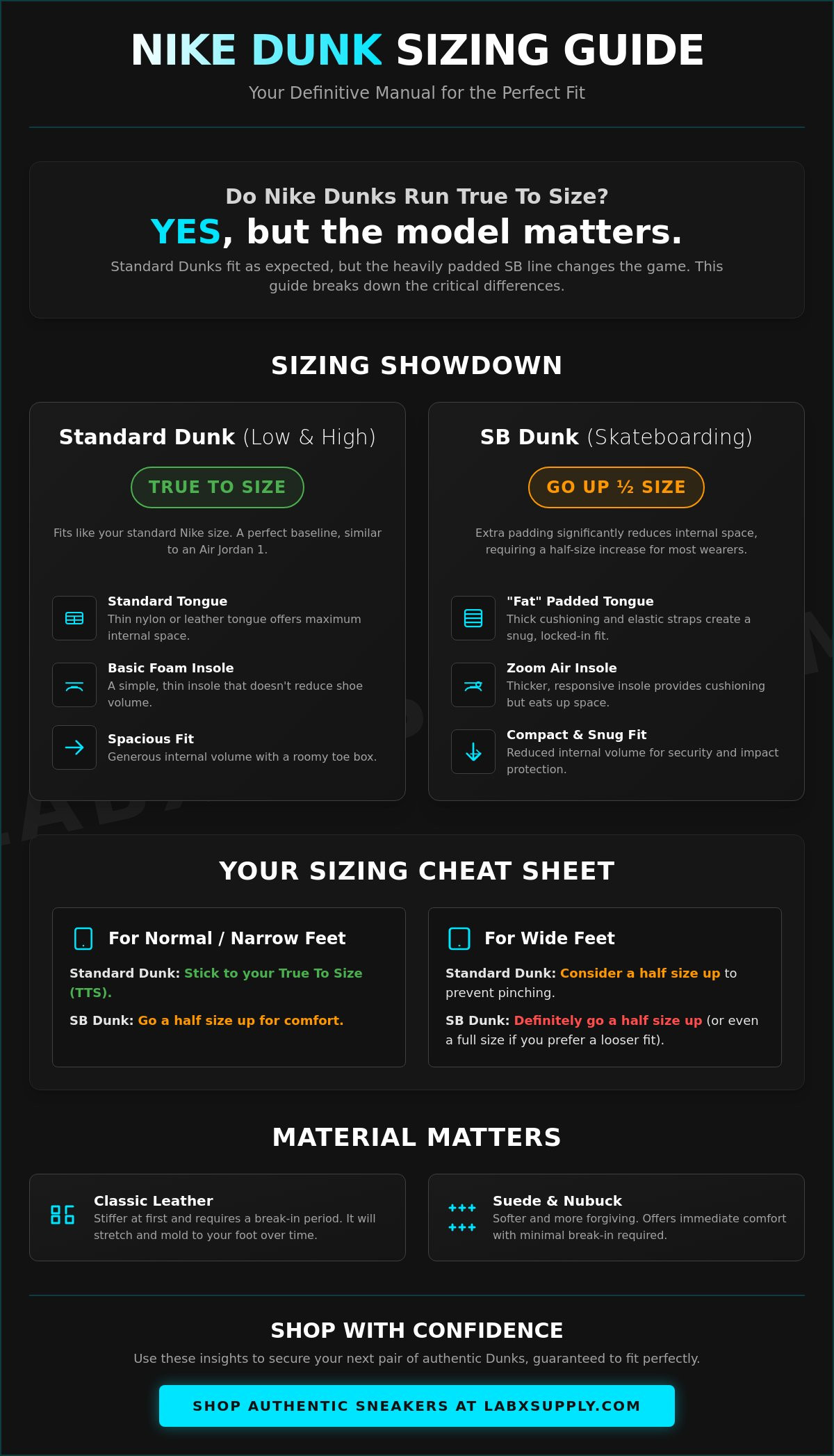
- Standard Nike Dunk models usually fit perfectly in your standard size, but answering do nike dunks run true to size requires looking at the specific padding of each model.
- Identify why the thick "fat tongue" and extra cushioning in SB Dunks often necessitate going up a half-size to avoid a cramped fit.
- Understand the difference in break-in periods between stiff classic leather and the more forgiving, immediate comfort of suede or nubuck.
- Apply the wide foot rule to determine exactly when you need extra internal volume to prevent pinching during long periods of wear.
- Use these sizing insights to shop for authentic sneakers with total confidence, ensuring your next resale purchase fits comfortably from the first wear.
The Baseline: Do Nike Dunks Run True to Size?
The short answer to the most burning question in the sneaker community is a resounding yes. For the vast majority of collectors and casual wearers alike, the standard Nike Dunk fits exactly as expected based on your usual shoe size. When enthusiasts ask, do nike dunks run true to size, they're looking for a comparison to the industry standard. In the world of Nike, this "standard" is the D-width last. This mold provides a medium width that accommodates most foot shapes comfortably without requiring drastic adjustments or size swaps.
If you've ever worn an Air Jordan 1, you already have the perfect reference point for your purchase. Both models share a very similar fit profile because they emerged from the same era of design. However, because of the Nike Dunk history as a 1985 basketball performance shoe, it features a slightly roomier toe box than the sleek, narrow silhouettes found in modern performance runners. This extra wiggle room provides a massive sense of emotional relief for buyers. It means you don't have to stress over complex size conversions or fear that your standard size will feel like a vice grip on your toes. You can simply stick to what you know.
The Dunk Low vs. Dunk High Foundation
Whether you prefer the chopped look of a Low or the classic silhouette of a High, the fit remains remarkably consistent across the board. Both styles utilize the same outsole and midsole tooling, meaning the platform under your foot is identical. While the Dunk High offers significantly more ankle support and padding around the collar, this extra material doesn't actually decrease the internal length or width of the shoe. The Dunk Low sizing standard remains the industry benchmark for 2026, serving as the baseline for almost every other lifestyle sneaker comparison in the market today.
Standard Width and the "Nike Last"
Nike designs the Dunk around a "last" intended for a medium (D) width. Because the Dunk features a relatively flat sole with minimal arch contouring, it often feels more spacious than a contoured running shoe of the same size. This flat footprint allows the foot to spread naturally, which is why many people find them comfortable for all-day wear. This predictable fit is a key reason why Dunks remain a staple for collectors who buy through resale platforms. For a deeper look at how these design choices impact the broader market and your buying strategy, you can explore The Ultimate Guide to Authentic Sneakers in 2026. Understanding these technical basics ensures you can buy with confidence, knowing exactly how the shoe will interact with your foot shape from the moment you unbox them.
The SB Dunk Exception: Why One Size Does Not Fit All
While the standard answer to do nike dunks run true to size is usually yes, the Nike SB (Skateboarding) line introduces a major technical variable. These aren't just aesthetic variations of the classic silhouette. They're built for high-impact performance, which means the internal architecture is significantly different from the lifestyle versions. If you apply your standard Dunk size to an SB model without accounting for these changes, you'll likely find the fit uncomfortably restrictive.
The primary difference lies in the sheer volume of padding. SB Dunks are designed to protect the foot during rigorous activity, leading to a denser construction that reduces the available space inside the shoe. This shift in internal volume is the reason why many long-time collectors treat the SB as a completely separate sizing category. If you're planning to invest in a premium pair, understanding these mechanical differences is the best way to avoid the frustration of a shoe that pinches your feet.
The "Fat Tongue" and Internal Volume
The most iconic feature of the SB Dunk is the heavily padded "fat tongue." This extra cushioning is designed to protect a skater's midfoot during flip tricks, but it consumes a substantial amount of vertical space. Additionally, SBs feature internal elastic tongue straps. These straps are meant to keep the tongue centered and provide a "locked-in" feel, but they also pull the upper closer to your foot. Because of this, a size 10 in a standard Dunk often feels exactly like a 9.5 in an SB Dunk. If you prefer a "roomy" fit or have a high instep, the standard size will likely feel too tight across the top of your foot.
Insole Thickness and Zoom Air
The cushioning isn't just on top; it's underneath your foot as well. Standard Dunks use a basic, relatively thin foam insole. In contrast, SB Dunks feature a much thicker insole with a Zoom Air pod embedded in the heel for impact protection. This technical upgrade elevates your foot slightly higher within the shoe than a standard model. This elevation, combined with the fat tongue, creates a "sandwich" effect that increases pressure on the toe box.
Some collectors actually swap their SB insoles for thinner versions to adjust the fit, but this can compromise the comfort the shoe is known for. To ensure you're getting the genuine materials and padding that define this fit, you must be wary of the dangers of counterfeit products, which often use inferior foam that doesn't mimic the true SB experience. For those with wide feet, going up a half-size is almost mandatory to accommodate this extra hardware. If you're looking for your next pair of authentic sneakers, always factor in this extra padding before hitting the checkout button.
Material and Silhouette Nuances: Leather vs. Suede
The material of your shoe is just as critical as the model when asking do nike dunks run true to size. While the internal dimensions might be consistent, how the upper reacts to your foot's movement changes based on the fabric or hide used. Traditional smooth leather Dunks are notorious for their initial rigidity. This stiffness comes from the protective coatings applied to the leather, which require a dedicated break-in period before the shoe truly feels like yours. If a leather pair feels slightly snug out of the box, don't panic. It's often the nature of the material rather than an incorrect size.
By 2026, Nike has significantly increased the use of recycled synthetic leathers across its mainstream releases. Unlike natural animal hides, these high-tech synthetics are engineered for extreme durability but offer much less natural stretch over time. If you're purchasing a "Next Nature" or sustainable variant, you should expect the fit to remain exactly as it feels on day one. Conversely, suede and nubuck versions are the "cheat code" for immediate comfort. These materials are softer and more pliable, allowing the forefoot to expand almost instantly. The toe-box perforations also play a role here; they act as mechanical hinge points that allow the material to flex without pinching your toes during each step.
The Stretch Factor of Premium Leather
It usually takes between five and ten hours of active wear for premium leather to mold to your unique foot shape. Because of this natural expansion, you should avoid sizing up in high-quality leather models if the length is already correct. If you size up to compensate for initial stiffness, you'll likely end up with a shoe that feels "sloppy" and develops excessive creasing once the leather softens. To speed up the process without damaging the sneaker, wear a pair of thick crew socks for your first few outings to gently stretch the pressure points.
Special Editions and Collaborative Materials
Collaborative releases often experiment with non-traditional materials that defy standard sizing logic. Canvas and denim uppers, which have seen a resurgence in 2026 collaborations, provide zero flexibility. If these feel tight during your first try-on, they'll stay tight forever, making a half-size increase a smart move. On the opposite end of the spectrum, deconstructed models strip away internal reinforcements and collar padding. These often feel a bit roomier, almost like a half-size larger than a standard Dunk. This focus on material-driven comfort mirrors the innovations seen in the slide series, where iterative design has redefined the expectations for daily-wear footwear in 2026.
The Perfect Fit Checklist: Lacing, Socks, and Wide Feet
Even after answering the question, do nike dunks run true to size, your personal styling habits and foot anatomy will dictate your final satisfaction. While the shoe's construction is consistent, how you interact with it isn't. To achieve that perfect "one-to-one" feel, you need to consider the external factors that can bridge the gap between a standard size and a custom fit. Before you finalize your next purchase, run through this checklist to ensure you won't be dealing with heel slippage or toe pinching.
- The Wide Foot Rule: If your feet are wider than a standard D-width, a 0.5 size increase is mandatory. This is especially true for the more rigid leather models discussed earlier in this guide.
- The Sock Bridge: Thick cotton crew socks can effectively reduce the internal volume by nearly a quarter-size. If you find your Dunks are slightly loose, skip the no-show liners and opt for heavy-duty padding to snug up the fit.
- Home Measurement: Don't guess your size based on old pairs. Trace your foot on a piece of paper at the end of the day when your feet are at their largest, then compare the centimeter measurement to Nike's official size chart.
Lacing Styles as a Sizing Tool
Lacing isn't just about aesthetics; it's a functional tool for micro-adjusting your fit. The popular "loose lace" method, where the laces hang freely without being tied, effectively expands the upper and makes a snug shoe feel like it's running true to size. However, if you're a narrow-footed buyer, this style can lead to annoying heel lift. In these cases, using the very top eyelet is essential to pull the collar tight against your ankle. If you prefer the hype-beast look of completely untied laces, you might actually need to go a half-size down to keep the shoe from flying off your foot during a stride.
The Wide Foot vs. Narrow Foot Verdict
Dunks are widely considered one of the most wide-foot friendly models in the 2026 market because of their flat, broad base. This design is a godsend for those with flat feet or low arches who often find modern, contoured sneakers too restrictive. For those with high arches, the standard lacing allows for plenty of vertical expansion without putting pressure on the top of the foot. The golden rule for Dunk sizing across all foot types is to prioritize the comfort of your widest point rather than focusing solely on the space in front of your toes. Once you've dialed in your specific size requirements, you can browse the latest sneakers with the peace of mind that comes from knowing exactly how they'll fit.
Securing Your Pair: Buying Authentic Dunks at Lab X Supply
Armed with the technical knowledge of how various silhouettes and materials interact with your foot shape, you're no longer guessing when you hit the "buy" button. In a market where high-profile collaborations and archival retros drive massive demand, sizing knowledge is your best defense against the dreaded buyer's remorse. There's nothing worse than spending over $200 on a pair of sneakers that look incredible on your shelf but pinch your toes the moment you step outside. By understanding do nike dunks run true to size for your specific foot type, you can navigate the 2026 resale landscape with the confidence of a seasoned collector.
At Lab X Supply, we recognize that the sneaker market is evolving into a serious investment asset class. With the global sneaker market projected to reach $159.4 billion by 2034, the importance of getting every purchase right has never been higher. We've built our reputation on a rigorous commitment to authenticity and quality control. Every pair of sneakers we offer undergoes a detailed inspection process to ensure that the materials, stitching, and internal padding match the exact manufacturer specifications we've discussed in this guide. This means the "fat tongue" of an SB Dunk or the recycled synthetic leather of a 2026 release will fit exactly as you expect them to.
The Resale Market Advantage
Navigating the secondary market often comes with a layer of "is it real?" anxiety that can ruin the excitement of a new pickup. When you shop with a trusted source, that anxiety disappears, allowing you to focus on finding the specific colorways and rare sizes that define your style. We curate our selection to include a wide range of sizing options, from standard D-width staples to the more specialized SB variants. For a deeper look into the evolving world of sneaker commerce and how to spot quality, check out our resource on Authentic Sneakers. We believe that an informed buyer is a happy buyer, and our goal is to provide the transparency you need to build a collection you can actually wear.
Ready to Shop?
Now that you've mastered the nuances of the "Internal Volume Formula" and the "Wide Foot Rule" from earlier in this guide, it's time to put that knowledge into practice. Whether you're hunting for a classic leather High or a padded SB Low, you can now select your size with total certainty. Our secure checkout and fast shipping mean your next favorite pair is only a few clicks away. Don't let sizing uncertainty hold you back from the drops you love. Take a moment to Browse our latest Nike Dunk collection at Lab X Supply and secure your perfect fit today. Bookmark this guide for future releases, as these sizing principles will remain the gold standard for every Dunk drop in 2026 and beyond.
Step Into Your Next Pair With Confidence
Mastering the nuances of Dunk sizing transforms a risky purchase into a guaranteed win for your collection. You now know that while the answer to do nike dunks run true to size is generally yes for standard models, the "fat tongue" of an SB Dunk and the rigidity of modern synthetic leathers require a more calculated approach. By applying the Wide Foot Rule and adjusting for your preferred lacing style, you've successfully eliminated the guesswork that often plagues the high-stakes resale market.
It's time to put that expertise into action. Find your perfect fit in our Nike Dunk collection at Lab X Supply today. We support your journey with a 100% Authenticity Guarantee, an expertly curated resale selection, and worldwide shipping available for every drop. Your collection deserves sneakers that feel as good as they look. Shop with the peace of mind that comes from being an informed collector and step out in total comfort.
Frequently Asked Questions
Should I size up for Nike Dunk Lows if I have wide feet?
Yes, you should typically go up a half-size if you have wider feet. While standard Dunks use a medium D-width mold, the leather overlays can feel quite restrictive across the ball of your foot. Sizing up prevents the material from pinching your toes and reduces the risk of excessive creasing over time. It's the most reliable way to ensure long-term comfort without sacrificing the shoe's classic aesthetic.
Do Nike Dunk Highs fit differently than Dunk Lows?
No, Dunk Highs and Lows fit almost identically underfoot. Both silhouettes share the same midsole and outsole tooling, meaning the actual length and width of the footbed don't change between models. The primary difference is the ankle collar height and the amount of padding around the heel. While the High offers more ankle support, it doesn't decrease the internal volume for your foot. You can safely wear the same size in both versions.
Why do people say Nike SB Dunks run small?
People say they run small because of the "fat tongue" and internal elastic straps that take up significant vertical space. Additionally, the thicker Zoom Air insole pushes your foot higher against the upper of the shoe. When asking do nike dunks run true to size, remember that SBs are the main exception. Most collectors recommend going up a half-size in SBs to compensate for this extra performance padding.
Can I wear the same size in Dunks as I do in Air Force 1s?
You might need to go up a half-size in Dunks compared to your Air Force 1 size. Air Force 1s are notorious for running large, and many people size down for them. Dunks follow a more traditional Nike fit that aligns with your actual foot measurements. If you wear a size 9 in AF1s, a 9.5 in Dunks is often the better choice for a comparable and comfortable feel.
How much do leather Nike Dunks stretch after wearing?
Natural leather Dunks will stretch slightly, usually about a quarter-size, after roughly ten hours of active wear. The material softens and begins to mold to the specific pressure points of your feet. However, you shouldn't expect a major change in the overall length. If the shoes are painfully short when you first try them on, they won't stretch enough to fix that specific problem. Always prioritize the correct length from day one.
What happens if I buy Dunks that are half a size too big?
Buying Dunks that are half a size too big often leads to annoying heel slippage and premature toe-box creasing. Since the shoe's flex point won't align perfectly with your foot, the leather will bend in unnatural places. You can fix this minor gap by wearing thicker crew socks or adding an extra insole. These adjustments help fill the dead space and secure your foot for a more stable stride.
Is there a difference between mens and womens Nike Dunk sizing?
Yes, there's a standard 1.5-size difference between US men's and women's sizing. For example, a men's size 7 is equivalent to a women's size 8.5. While the internal length is the same, some women's releases are built on a slightly narrower last. Always check the specific size chart if you're crossing over between gendered releases to ensure the width is appropriate for your foot shape.
Are Nike Dunks comfortable for walking all day if they are TTS?
They are comfortable for casual walking, but they lack the advanced arch support found in modern running shoes. Because the Dunk has a flat sole, it's great for stability but can feel firm after several hours. If you find your true-to-size pair feels a bit stiff, adding a cushioned aftermarket insole can provide the extra support needed for long days. Overall, do nike dunks run true to size for comfort? Yes, provided you don't require high-impact arch support.